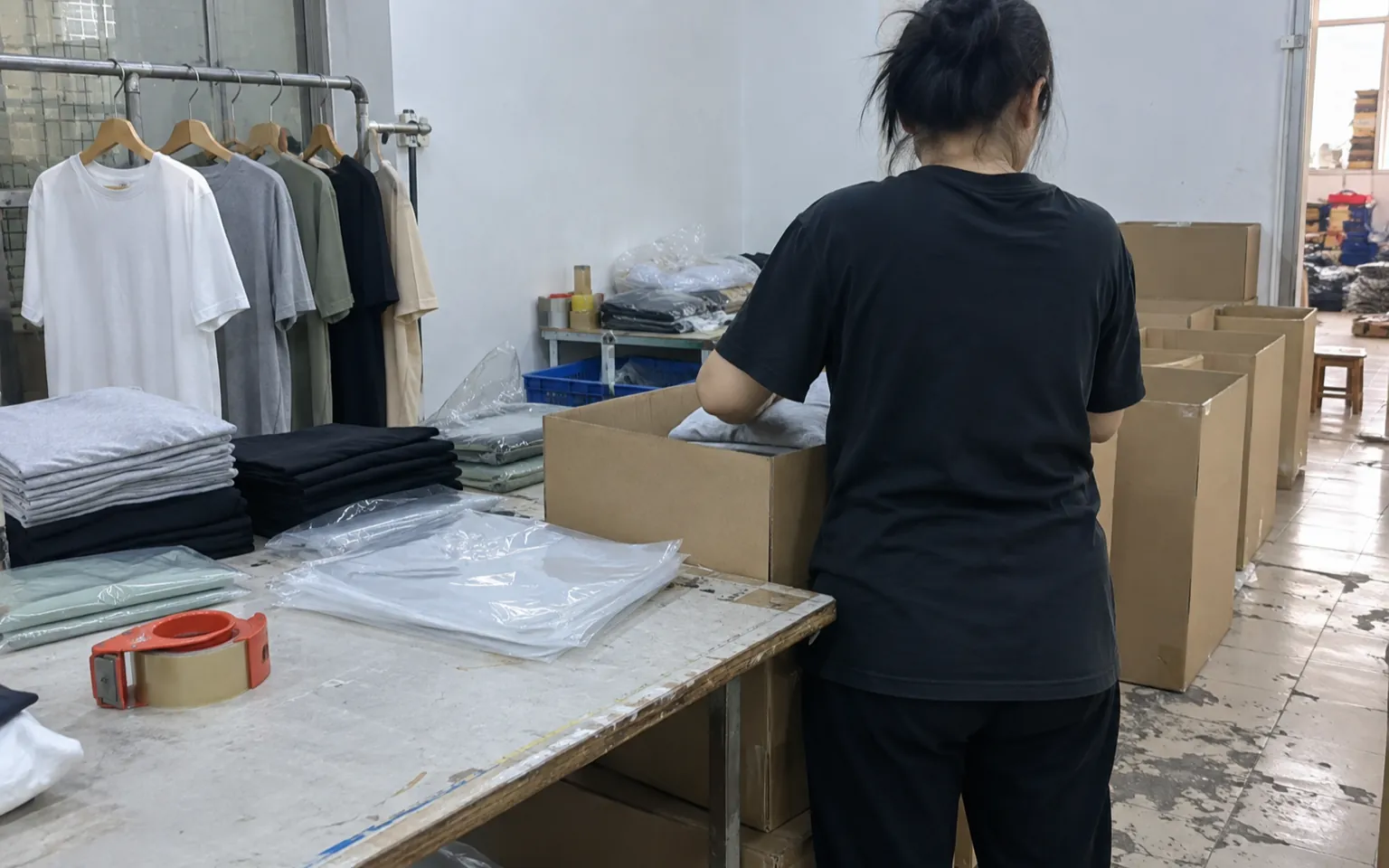
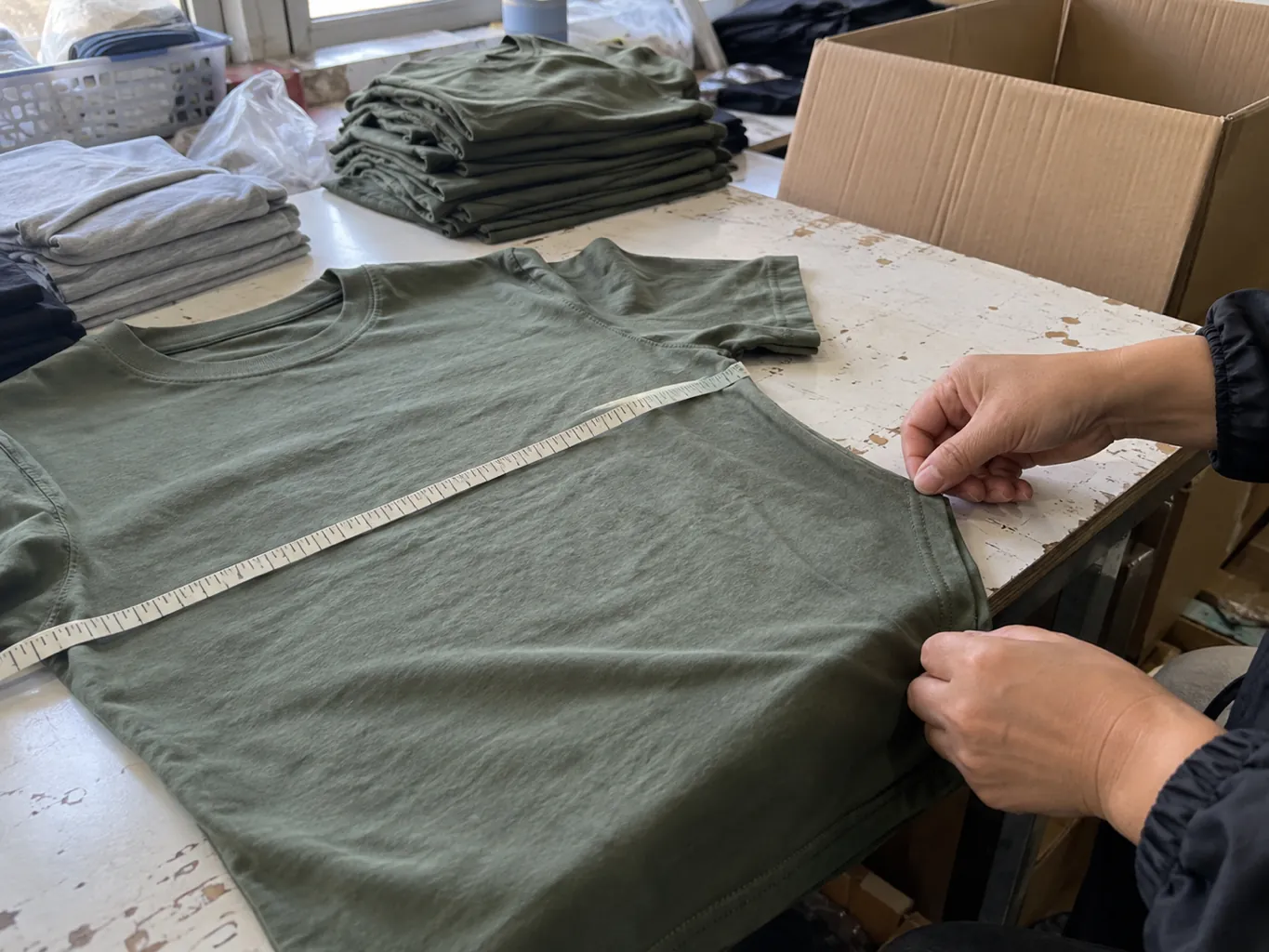
How Long Should You Allow from Sampling to Delivery?
Allow 7–14 days for sampling and approximately 30–45 days for production after sample approval; shipping takes additional time.
What Stages Make Up a Custom Apparel Lead Time?
Your order moves through requirements and material confirmation, sampling, sample approval, bulk production, final inspection and payment release, then transportation and receipt. Our 7–14-day sampling range covers just the sampling stage. Ask which event starts the clock for your order. Packaging artwork, receiving information and freight inquiries can move forward while sampling is underway. Production approval should still refer to the final sample and documents. Resolve outstanding decisions before the agreed production start.
Why Is Production Completion Different from Delivery?
Production completion, shipment release, carrier collection, destination delivery and sellable inventory are separate milestones. The approximately 30–45-day production range after sample approval does not establish when a carrier will collect your cartons or when your warehouse can receive them. Inspection, payment release and transportation need their own arrangements. Ask the supplier to name the milestone behind each date, then allow for your receiving checks and stock preparation before scheduling a launch.
What Can Change Your Actual Order Schedule?
Style complexity, material readiness, approval speed, packaging and transportation arrangements all affect the schedule. A 100-piece order still needs the correct fabric, approved artwork and available production capacity. Canton Fashion was established in Guangzhou in 2015. We coordinate a network of cooperating factories, so confirm the allocation for your particular order. Ask what is still outstanding and whether the proposed dates depend on it. The quotation should spell this out. It should not assign a fixed delay to every change without a basis for doing so.
How Do You Work Backward from Your Apparel Launch Date?
Start with your sellable-stock date and work backward through receiving, transportation, shipment release, production and sample approval.
How Can a Clothing Brand Build a Backward Procurement Calendar?
Start with the date stock must be ready to sell. Then work backward, subtracting the time each earlier stage needs. Use our 7–14-day sampling and approximately 30–45-day production ranges as planning inputs, alongside the actual transportation quote. We recommend agreeing an order-specific allowance for unresolved tasks. Do not assume every stage will finish at the earliest date. Keep target dates distinct from dates both parties have expressly committed to.
| Milestone, working backward | Target date to enter | Prerequisite | Responsible party to confirm | Written record |
|---|---|---|---|---|
| Stock ready to sell | Launch-ready date | Receiving and stock preparation completed | Brand and warehouse | Launch and receiving plan |
| Goods received | Date required before stock preparation | Quoted transportation and destination handling completed | Logistics provider and receiver | Delivery scope and booking |
| Shipment released | Date required for carrier collection | Any agreed inspection resolved and balance receipt confirmed | Supplier, inspector and buyer | Inspection and payment records |
| Production completed | Date allowing for shipment release | Approximately 30–45 days after sample approval, subject to the order schedule | Supplier | Accepted production schedule |
| Sample approved | Date supporting the production start | Final sample and production files approved | Brand's authorized approver | Dated approval |
| Sampling started | Date allowing 7–14 days for sampling | Agreed sampling inputs ready | Brand and supplier | Sampling start confirmation |
Which Tasks Should Run Alongside Sampling?
During the 7–14-day sampling period, prepare packaging artwork, hangtags, size labels, receiving details and transportation inquiries. Give each task an owner and an approval record. That keeps pending accessories on the schedule. Ask the supplier which material and packaging decisions must be completed before production can start. Preparing these items in parallel keeps decisions moving. Bulk production still needs final sample approval.
What Should You Change If the Calendar Does Not Fit?
We would first consider moving the launch date. Do not rely on an unconfirmed shorter production schedule. Next, ask whether simplifying customization would change the quoted timeline, then assess split shipments and alternative transportation. For a 100–500-piece order, obtain the revised cost and quantity allocation before approving a split. Have the supplier confirm the updated schedule and any order-specific buffer in writing. A change only helps if it makes stock available for sale sooner.
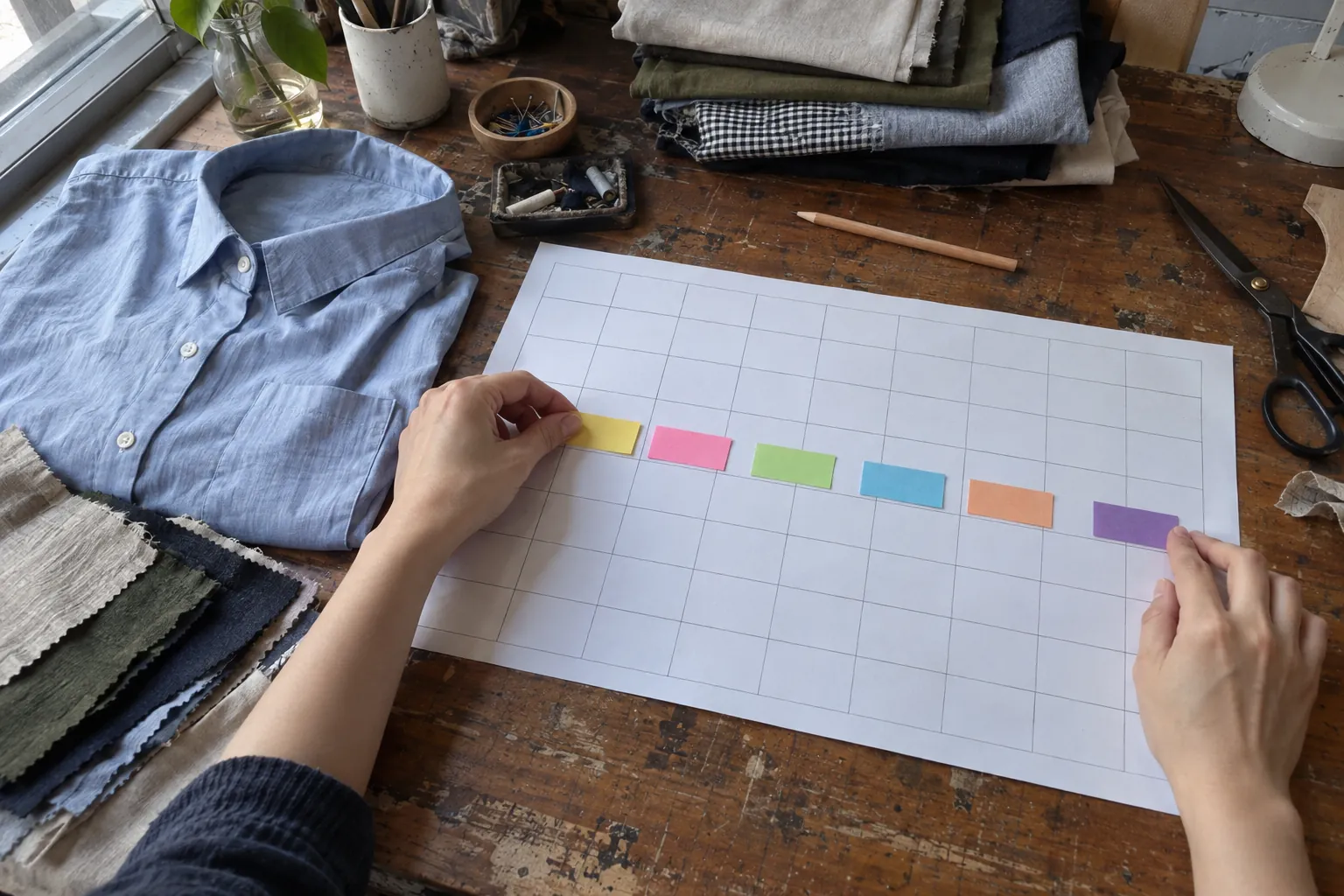
What Must Be Approved Before Bulk Apparel Production?
Bulk production should follow the final approved sample, design files and packaging requirements.
Which Production Documents Should Sample Approval Lock?
Approve the physical sample alongside the technical pack, size chart, colors, fabric specification and final logo file. In a previous order, production went ahead before sample approval. The garments used a logo version that differed from the buyer's final website branding. The issue was the logo version, rather than a manufacturing-quality defect. Before starting the approximately 30–45-day production period, record the approved file versions and identify who may authorize later changes. A message saying “approved” should make clear exactly what it approves.
Why Must Custom Packaging Be Confirmed with the Order?
In another order, the buyer requested a customized zipper bag only when shipment was approaching. That particular bag needed approximately 3–4 weeks to produce. The remaining time was too short. The order ultimately shipped in plain transparent bags without a logo. This was the lead time for that packaging requirement, not a standard for every bag or accessory. Confirm packaging, hangtags and other accessory artwork with the order, and include their availability in the production schedule.
How Should You Assess Changes After Approval?
Ask for a written change record describing the modification, affected operations and any new approval requirement. Compare the revised dates with the original approximately 30–45-day production plan instead of assuming the change fits inside it. If a logo, fabric or packaging change affects goods already made or materials already ordered, request the order-specific cost and timing consequences. Approve those consequences before work proceeds. Keep the original approval and revised version together.
How Should You Schedule and Inspect a 100–500-Piece Order?
Small orders still need their own production schedule and agreed acceptance criteria.
Does a 100-Piece MOQ Mean a Shorter Lead Time?
Our usual MOQ is 100 pieces. We can discuss specific requirements, but acceptance of a smaller quantity is not automatic. Small orders commonly range from 100–500 pieces, while production still generally takes approximately 30–45 days after sample approval. Our monthly production capacity figures vary by product: approximately 30,000–50,000 T-shirts or sweatshirts, compared with 10,000–20,000 more complex garments such as dresses or suits. Those figures cover our cooperating production network and vary by product. They do not mean we have reserved capacity for your order. Ask for the actual production allocation and check how the MOQ applies to your proposed assortment.
How Should a Small Apparel Order Arrange Final Inspection?
For small orders, we generally recommend final inspection. Buyers can discuss additional inspections if their requirements call for them. Inspection fees are generally USD 100–200 per person-day, which is a labor rate rather than a fixed total for the order. Confirm who arranges the inspection, its scope and the expected person-days before budgeting. Schedule it so the findings, any agreed corrective work and payment release can be addressed before the planned collection. Keep the report and release decision with the order records.
Why Must Inspection Standards Be Agreed Before Ordering?
In a previous order, the buyer had not agreed the inspection expectations in advance and later applied requirements that prevented shipment. Our assessment was that the goods would have passed against AQL 2.5 and 4.0, but the buyer expected different acceptance criteria. Those values are not automatic acceptance rules for every order. Agree defect classifications, sampling arrangements and acceptance criteria before production, including how disputes or failed checks will be resolved. Factory documentation has a separate scope. BSCI documentation is in the cooperating factory's name, not Canton Fashion's. It does not replace inspection of your order.
Should You Choose Courier, Air Freight or Sea Freight?
Choose transportation by your required delivery date, shipment size and total quoted cost for the same delivery scope.
How Should Small Apparel Orders Compare Courier, Air and Sea?
Request all 3 options for the same packed shipment and receiving address. Then compare those that meet your delivery deadline. Consider courier when parcel handling suits the shipment. Compare air freight and sea freight where their quoted routing, handling and cost fit the order. Ask each provider to identify its chargeable weight or volume basis, minimum charges and handling assumptions. We would not choose a service on its headline rate. A transport label alone does not guarantee the earliest arrival or lowest total cost.
Use the actual order's packing details as the comparison basis: garment quantity, carton count, dimensions and gross weight of each carton. Give each logistics provider the same information.
| Method | Suitability question | Quoted transportation time required |
|---|---|---|
| Courier | Does the parcel service cover the required address and shipment characteristics? | Request a transit estimate for the actual receiving address, with defined start and end milestones and explicit confirmation of whether customs clearance and final delivery are included. |
| Air freight | Do the flight, terminal handling and onward delivery arrangements fit the deadline? | Request a transit estimate for the same destination and comparison milestones, specifying whether airport handling, customs clearance and onward delivery are included. |
| Sea freight | Does the sailing and destination delivery schedule leave enough time before launch? | Request a transit estimate for the same destination and comparison milestones, specifying whether port handling, customs clearance and onward delivery are included. |
For each quotation, record the amount, currency, quotation date, validity period and included and excluded charges. Account for any separately quoted services needed to reach the agreed receiving point before comparing total costs.
What Do the Quoted Transit Time and Freight Cost Cover?
Check collection, export handling, main transportation, destination handling, customs clearance and final delivery separately. Comparing 3 transport methods only helps when the origin and destination milestones match. A port-to-port quote cannot be compared directly with a door-to-door quote without accounting for the missing services. Ask what starts and ends the quoted transit period. Also ask which exclusions could affect your receiving date or budget. Put the accepted service scope beside the production schedule before choosing an option.
What Must the Brand and Supplier Prepare Before Delivery?
Our recent export mix has been approximately 80% United States, 10% Australia and 10% EU countries. Each shipment still needs destination-specific arrangements. Provide the receiving address, contact details and any warehouse appointment instructions. Agree who supplies packing information and commercial documents, and who arranges the import process and destination charges. Confirm these responsibilities for the specific destination. That means the actual US location, Australian location or EU member state. Do not reuse a previous destination's tax assumptions or clearance timeline in a new quotation.
How Should You Plan the Deposit, Inspection and Final Payment?
New customers pay a 30% deposit, may inspect before shipment, and must pay the balance before goods are released.
Which Milestones Apply to the 30% Deposit and Balance?
Put the 30% deposit against the agreed order details and record the conditions for starting production. Inspection can take place before shipment. The balance must be paid before goods leave. When arranging collection, distinguish sending the payment from the supplier confirming receipt. Ask how the parties will coordinate payment receipt, inspection approval and shipment release. The carrier booking needs to match the order's actual status.
| Payment or order stage | Condition to record | Confirmation to retain |
|---|---|---|
| Deposit | New-customer deposit of 30%; agreed order details and production-start conditions | Order confirmation and payment receipt |
| Production | Approved sample and accepted production schedule | Approval and progress records |
| Pre-shipment inspection | Agreed inspection arrangements and acceptance criteria | Inspection report and disposition |
| Balance payment | Remaining balance settled before shipment | Supplier's receipt confirmation |
| Shipment release | Inspection status resolved as agreed and balance received | Release and collection confirmation |
What Costs Should You Budget for Beyond the Garments?
Our sample fee is generally USD 50–150 per piece, depending on the style; T-shirts and sweatshirts tend toward the lower end, while suits and shirts cost more. Inspection is generally USD 100–200 per person-day, so confirm the planned inspection effort rather than treating that range as the full invoice. Add transportation and any other charges established by the actual order quotation. We recommend keeping payment dates beside each budget line. Even an affordable cost can fall due before sales revenue arrives.
- Sampling budget = quoted fee per sample × sample quantity.
- Inspection budget = quoted person-day rate × agreed person-days, plus any separately quoted charges.
- Deposit requirement = 30% × the agreed order-value basis.
- Balance requirement = agreed unpaid order balance before shipment.
- Logistics budget = accepted transportation quote + applicable excluded services and destination charges.
When Can Returning Customers Receive 30–60-Day Balance Terms?
Returning customers may receive 30–60 days of credit on the balance depending on the results of a Sinosure export credit insurance check. These terms do not automatically apply to every repeat buyer and are not our standard new-customer arrangement. Confirm eligibility before including credit in your cash-flow plan. Both parties must agree on what starts the credit period, as well as the payment due date for that order. Do not treat previous purchasing history alone as approval.
What Delay Responsibilities Should Be Agreed Before Ordering?
Put delivery milestones, responsibility for each stage and the process for handling delays into the written order.
How Do You Distinguish Buyer Changes, Production Delays and Shipping Delays?
Compare the delay with the dated sample approval, design changes, production updates and carrier handover records. If the production plan uses approximately 30–45 days after sample approval, check the actual approval date first. Then judge whether production has slipped. Separate time spent awaiting a buyer decision from production execution and transportation events. Ask the parties to agree who handles each issue and how it affects later milestones. These are matters to negotiate for the order, rather than a statement of automatic compensation or existing contract terms.
What Should Both Parties Confirm When a Delay Appears?
Request a written description of the issue, the affected milestone and a revised schedule. For a launch planned around a 100–500-piece order, identify which quantities can still meet the required receiving date. Agree the proposed remedy, how progress will be reported and who can approve a new arrangement. Record the buyer's acceptance or outstanding objections alongside the updated dates. The launch team needs a usable date and decision point. A general promise to deliver soon provides neither.
Who Should Pay for Expedited Shipping, Split Shipments or Rework?
Ask for the reason, cost and expected timing benefit of each proposed remedy before authorizing it. Splitting a 100–500-piece order changes the shipment plan, so obtain a quotation for the proposed quantities and routes. Allocate additional costs according to the cause and the parties' written agreement. Record who approves the spending. Add when the remedy may proceed, along with any reinspection or revised acceptance requirements for reworked goods. Do not assume either party must bear every extra cost in every delay scenario.
Which 15 Questions Should You Ask Before Paying a Deposit?
Get written answers to these 15 questions before committing your first order deposit.
Which 5 Questions Cover Timing and Production Approval?
- Working backward from my launch date, when must I approve the sample? Ask for a dated procurement calendar. It should include receiving preparation, transportation, inspection, payment release and production.
- What event starts the 7–14-day sampling period? Obtain confirmation of the required inputs and the accepted start date.
- What completion milestone does the approximately 30–45-day production period after sample approval refer to? Get the production schedule. Check whether the dates are estimates or commitments.
- Which final files govern fabric, sizing and the logo? Get the approved sample reference, technical pack and file versions. Record the name or role authorized to approve changes.
- Are packaging, hangtags and other accessories approved and included in the schedule? Get the final artwork and specifications. Confirm expected availability alongside the garment plan.
Which 5 Questions Cover Shipping and Acceptance?
- Which transport option fits my delivery deadline and budget? Obtain comparable courier, air and sea quotations for the same shipment and destination.
- Which services does the quotation include, and where does the transit clock start and stop? Get an itemized scope. It should state exclusions, quotation validity and defined transport milestones.
- Who handles import arrangements, destination charges and final receipt? Obtain a responsibility list naming the relevant buyer, supplier and logistics contacts.
- Which final-inspection standard applies, who arranges it and when will it happen? Get the agreed sampling and acceptance criteria. Also obtain the inspection booking and cost basis.
- If inspection identifies a problem, how will correction, reinspection and a revised shipment date be agreed? Get the written decision process and release criteria. Check that the responsible approvers are identified.
Which 5 Questions Cover Payments and Delay Responsibilities?
- When are sample fees, inspection fees and transportation charges payable? Obtain a cost schedule showing each amount or quotation basis and its due milestone.
- What order-confirmation conditions accompany the new-customer 30% deposit? Obtain the agreed specifications, quantity, price basis and conditions for starting production.
- How will inspection, balance receipt and shipment release connect? Obtain a release plan confirming that goods ship only after the balance is paid.
- What credit assessment is required for a returning customer to receive 30–60-day balance terms? Ask for the Sinosure-based decision. Get any approved credit start date and due date.
- If design changes, production delays or transportation delays occur, who notifies whom, approves revised dates and pays the agreed extra costs? Get the responsibilities and approval requirements in writing. Include the agreed method for allocating those costs.
What Should You Include in an Inquiry to Check Your Launch Deadline?
Send your order requirements and receiving deadline; we generally respond to inquiries within 1 business day.
What Purchasing Details Are Needed to Assess the Schedule?
Provide the product styles, quantities, technical pack or reference sample, customization and packaging requirements. Include both the target launch date and the date goods must reach the actual receiving location. For a typical 100–500-piece first order, show the proposed style and size breakdown so the supplier can assess the request. Flag unresolved decisions before scheduling. These might include a logo revision or unapproved packaging. Include the receiving country and specific location so transportation can be quoted against the same destination.
What Order Details Should the Inquiry Resolve?
Ask for a sampling arrangement, estimated bulk-production schedule, transport proposal, quotation scope, payment milestones and inspection agreement. Our 7–14-day sampling and approximately 30–45-day production ranges are a starting point. The reply should explain how they apply to your actual order. Check whether each proposed date depends on an approval, material decision or logistics booking still outstanding. Keep the resulting confirmations together. Use them to check whether the order fits both your launch calendar and cash requirements.
How Can You Submit Your Requirements to Canton Fashion?
Send your product files, quantity, packaging requirements and delivery destination through the website's inquiry option or the WhatsApp button on this page. State your required receiving date and ask us to assess sampling, production, shipment and payment together. We generally respond within 1 business day. That timeframe covers our response. It does not mean we can complete every quotation or accept every order within that period. Share your first-order brief with Canton Fashion so we can discuss a schedule and payment arrangement matched to your requirements.
Frequently Asked Questions
Does the 30–45-day production estimate include delivery to my warehouse?
No; the approximately 30–45 days cover bulk production after sample approval, with shipping taking additional time. Sampling takes 7–14 days, and your launch calendar also needs to account for inspection, payment release, receiving checks and stock preparation.
What needs to happen before my first order can be released for shipment?
Any agreed inspection must be resolved, and the supplier must confirm receipt of the remaining balance before shipment release. New customers pay a 30% deposit, with the agreed order details and production-start conditions recorded.
Does my freight quote include customs clearance and delivery to the receiving address?
Only if those services are included in the accepted quotation. Check customs clearance, destination handling and final delivery separately, along with any excluded charges. Compare quotations using the same origin and destination milestones.
Are sampling and inspection fees fixed charges for the entire order?
No; sample fees are generally charged per piece, while inspection fees are generally quoted per person-day. Samples generally cost USD 50–150 per piece, depending on the style. Inspection generally costs USD 100–200 per person-day, so confirm the expected person-days and any separately quoted charges before budgeting.
Will placing a repeat order automatically qualify me for balance payment credit?
No; previous purchasing history alone does not qualify a buyer for credit. Returning customers may receive 30–60-day balance terms depending on the results of a Sinosure export credit insurance check. Both parties must agree on the credit period's starting event and the payment due date for that order.