In What Order Should You Choose a Clothing Manufacturer in China?
Define the garment, shortlist suppliers, verify production, approve a sample, compare matched quotes, then confirm the order terms.
For a first order without a purchasing team, follow this sequence. A low quote means little before the supplier knows the fabric, construction, artwork, quantities, and packaging. Likewise, a factory visit does not settle whether that supplier can make your style on your schedule.
Start with a brief that every candidate receives. Use their replies to narrow the list, then ask the remaining suppliers who will make the goods and what they need before sampling. Once you have an approved sample and a written specification, ask for revised quotes on those same terms. Canton Fashion’s usual MOQ is 100 pieces; a buyer considering a 100–500-piece first order should still confirm how that minimum applies to each style and color.
What style, quantity, fabric, and process details should you prepare before contacting suppliers?
For a first inquiry, start with your planned quantity, whether you intend to sell online or in physical stores, and a comparable style. A product link, clear images, or a physical garment can show what you have in mind. If you already know the fabric, size range, decoration, or target date, include those details. You do not need to invent specifications you have not decided.
Say what you do not know and ask the supplier what it needs to assess the style and discuss sampling. A supplier can help with fabric or construction choices, but should identify assumptions before turning a reference into a final production quote. As those choices become clear, keep a dated version of the agreed requirements so later changes can be traced.
Which decisions need written confirmation between shortlisting and ordering?
Get written answers for the contracting company, actual production site, MOQ basis, sample cost and timing, and the files the supplier will use. Before bulk production, confirm the approved physical sample, measurements, fabric, color, artwork version, packaging, inspection standard, production schedule, and quote scope.
Keep these confirmations together with the purchase order or contract. If a logo file changes after sampling, name the new file version and get an acknowledgment from the person managing production. A message saying “use the new one” does not identify the file. Both sides need one record to follow when cutting, decorating, inspecting, and packing begin.
Where Can a Small Brand Find Chinese Clothing Suppliers and Build a Shortlist?
Search by garment type and order size, then record who will manage and perform production.
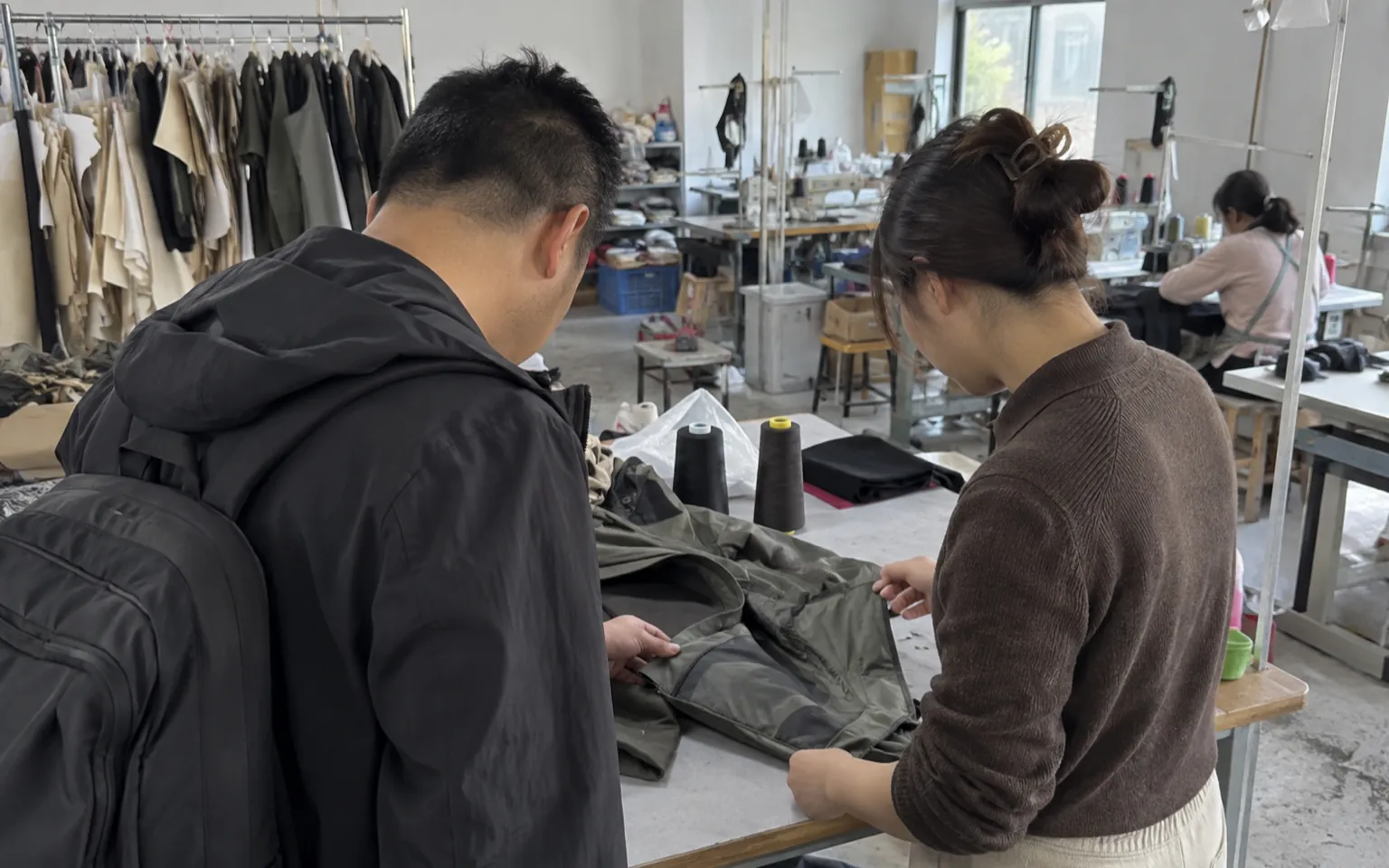
Search engines and supplier directories can provide starting names. Referrals from other apparel buyers and in-person meetings can add candidates. A visit is useful when you can examine relevant samples and discuss how an order moves through production. These routes give you names to check. They do not establish whether a supplier fits your project.
Record the same information for every candidate: main garment categories, experience with your kind of construction, workable order size, contact person, proposed production arrangement, and any unanswered questions. Canton Fashion, founded in Guangzhou in 2015, coordinates development and production through a network of partner factories. To assess that model, ask who is responsible for the order and which factory will make it.
How do you find suppliers suited to a small apparel brand?
Search for your garment and its defining process, such as a hoodie with embroidery or a dress with lining, rather than searching only for “clothing factory.” Then ask whether the supplier handles orders near your planned quantity and can show relevant work. A supplier may make T-shirts yet lack the setup for a structured blazer; category fit matters before price.
Send each candidate the same short brief. Keep those who answer questions about your garment, point out missing details, and explain how sampling would proceed. Record how long each supplier takes to give a useful first reply and to answer follow-up questions. If replies are repeatedly slow or incomplete, account for the delay when narrowing your list: it can hold up sampling and the whole order. An immediate price without a defined fabric, construction, or quantity may help as an opening estimate. It is not yet a comparable offer.
How do you distinguish a factory, trading company, and partner-factory coordinator?
Ask the supplier to describe its role in plain terms: who signs the agreement, who develops the sample, where bulk production happens, who checks quality, and who resolves a discrepancy. Using another factory for production is a normal arrangement. Ask the supplier to explain how it coordinates that work and who is responsible for your order.
If the contracting company and sewing factory differ, request the proposed production site’s name before you rely on its capacity or audit documents. Ask how the supplier will keep you informed if it needs to use another site. Those answers tell you who is responsible for the order. The supplier still decides how to organize production.
What should your first inquiry contain to get useful replies?
Give each supplier three things: the quantity you plan to order, whether you plan to sell online or in physical stores, and a style you want to use as a reference. A link or a few images are enough to begin. If you do not know the fabric, construction, size breakdown, or packaging yet, say so plainly. Ask what the supplier would need to advise on sampling and give a firmer quote.
Compare how clearly and promptly suppliers answer, including which decisions they say are still open. Their first price may rest on different assumptions. Once you have settled the garment and order details, give the shortlisted suppliers the same requirements and ask each to state what its revised quote includes and excludes.
How Do You Verify a Supplier’s Identity, Production Site, and Quality Controls?
Match the contracting company, actual production factory, and supporting documents to the order you plan to place.
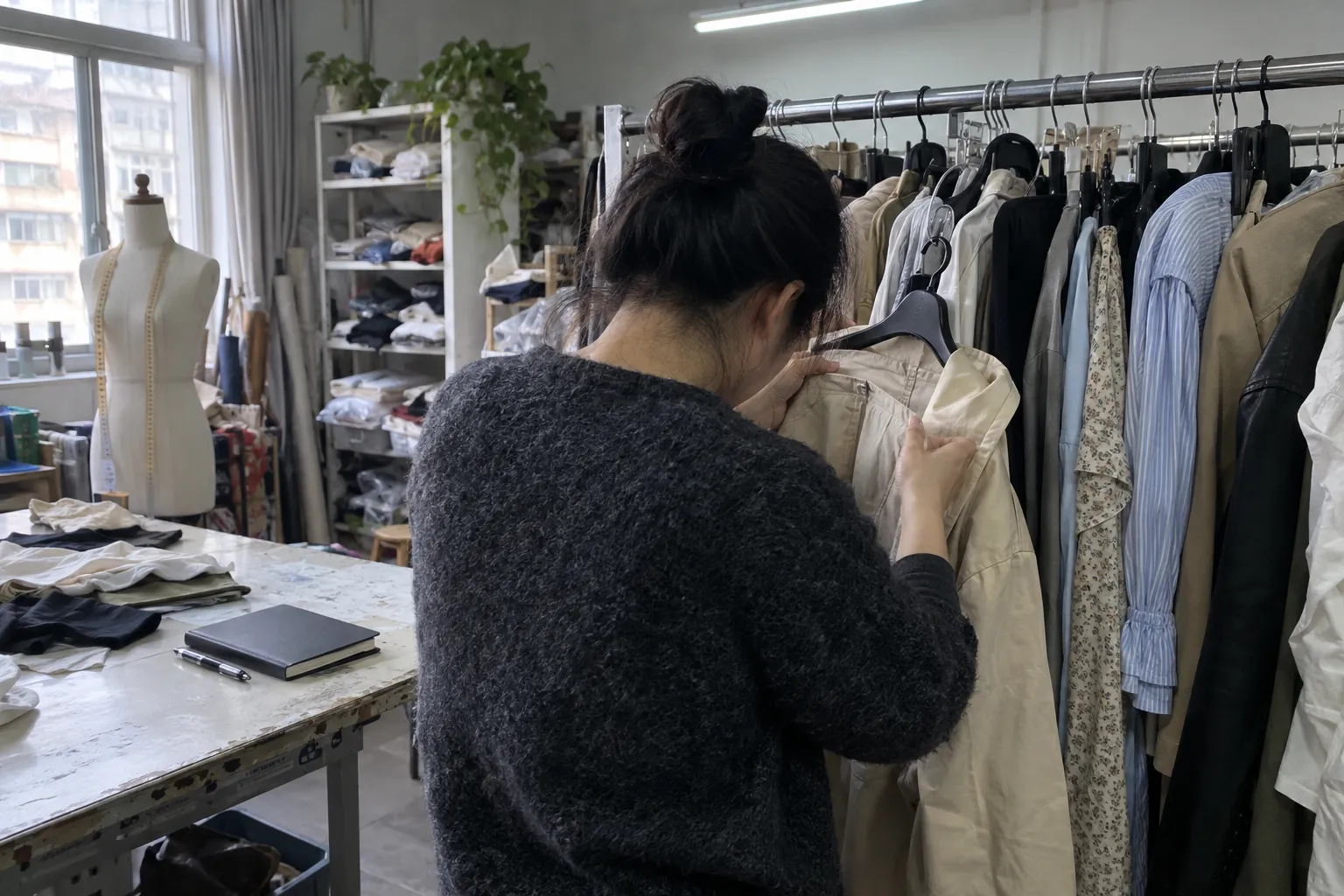
Request the legal company name that will invoice and sign your order, then ask where the sample and bulk goods will be made. Ask who approves materials, handles production changes, and receives an inspection report. Check whether the document’s holder, scope, and production site match the claim.
Canton Fashion coordinates partner factories. A BSCI certificate is held by a partner factory, not by Canton Fashion itself. If BSCI matters to your buying decision, request the relevant factory’s document and check that it applies to the site proposed for your order. Do not treat a certificate from one factory as proof about every factory in a supplier’s network.
What should you check when the contracting company and factory are different?
Record the contracting company, the proposed production factory, and the site’s address. Ask who is responsible for fulfilling the order, who coordinates the schedule and any corrective work, and how you will be told if the production site changes. If the supplier works with several factories, ask which one it currently plans to use for your garment and why. The purpose is to get an honest account of the arrangement, not to rule out subcontracting or require the buyer to direct every production decision.
Check documents against that answer. A business registration identifies the contracting entity; factory or audit documents concern the named production site. Use the paperwork to trace responsibility from your purchase order to the production site.
What can a video tour, site visit, or formal audit establish?
A live video tour can help you see the stated site and ask to view relevant work, material storage, sample handling, or inspection areas. An in-person visit allows a closer look and conversation with the people involved. A formal audit examines a defined set of requirements and produces a report. Agree on the scope before paying for any of these checks.
As a reference from Canton Fashion’s experience, a simple factory visit may cost US$100–200 per person per day; a formal audit may cost about US$3,000–5,000. Ask what the quoted fee covers and who will conduct the check. A visit fee and a formal audit fee should not be compared as though they buy the same work.
How do you verify a partner factory’s BSCI certificate?
Ask for the certificate or audit document tied to the factory proposed for your order. Check the holder’s name, site, scope, and validity information on the document, and ask the supplier to explain any difference between that name and the name on your contract.
For Canton Fashion, the relevant BSCI document belongs to a partner factory. Whether that factory is the production site for a particular order must be confirmed for that project. Record the answer before presenting the document to your own team or retail customer.
Do the Supplier’s MOQ, Sampling Schedule, and Capacity Fit Your Order?
Check the MOQ and timeline against your exact style; capacity figures change with garment complexity.
Canton Fashion’s usual MOQ is 100 pieces, and requirements outside the usual setup can be discussed. Its typical sampling time is 7–14 days, with sample fees generally US$50–150 per piece, depending on the style. Bulk production is usually about 30–45 days after sample approval. These are planning references; the quote should state the schedule for your materials, processes, and order.
Do not use a supplier’s monthly capacity as a promise that your order has a reserved slot. Ask what work is already scheduled, which processes your garment needs, and when the approved sample and materials must be ready.
How should a 100–500-piece trial order handle MOQ by style and color?
Ask whether the MOQ applies to the whole order, each style, each color, or another production unit. Then provide your size breakdown. A 100-piece total can require different fabric and decoration setups depending on how it is split, so a total alone may not settle feasibility.
Canton Fashion commonly works with smaller orders in the 100–500-piece range. If you need a different quantity or configuration, describe the specific garment, colors, and process instead of assuming that “flexible MOQ” covers every combination. Get the accepted breakdown in the quote.
How do you confirm sample cost, timing, and acceptance criteria?
Ask what the US$50–150 sample fee covers for your proposed style, what materials must be ready, and when the 7–14-day sampling period starts. A T-shirt or sweatshirt sample may fall at a different fee level from a shirt or suit; request the figure for the garment you intend to make.
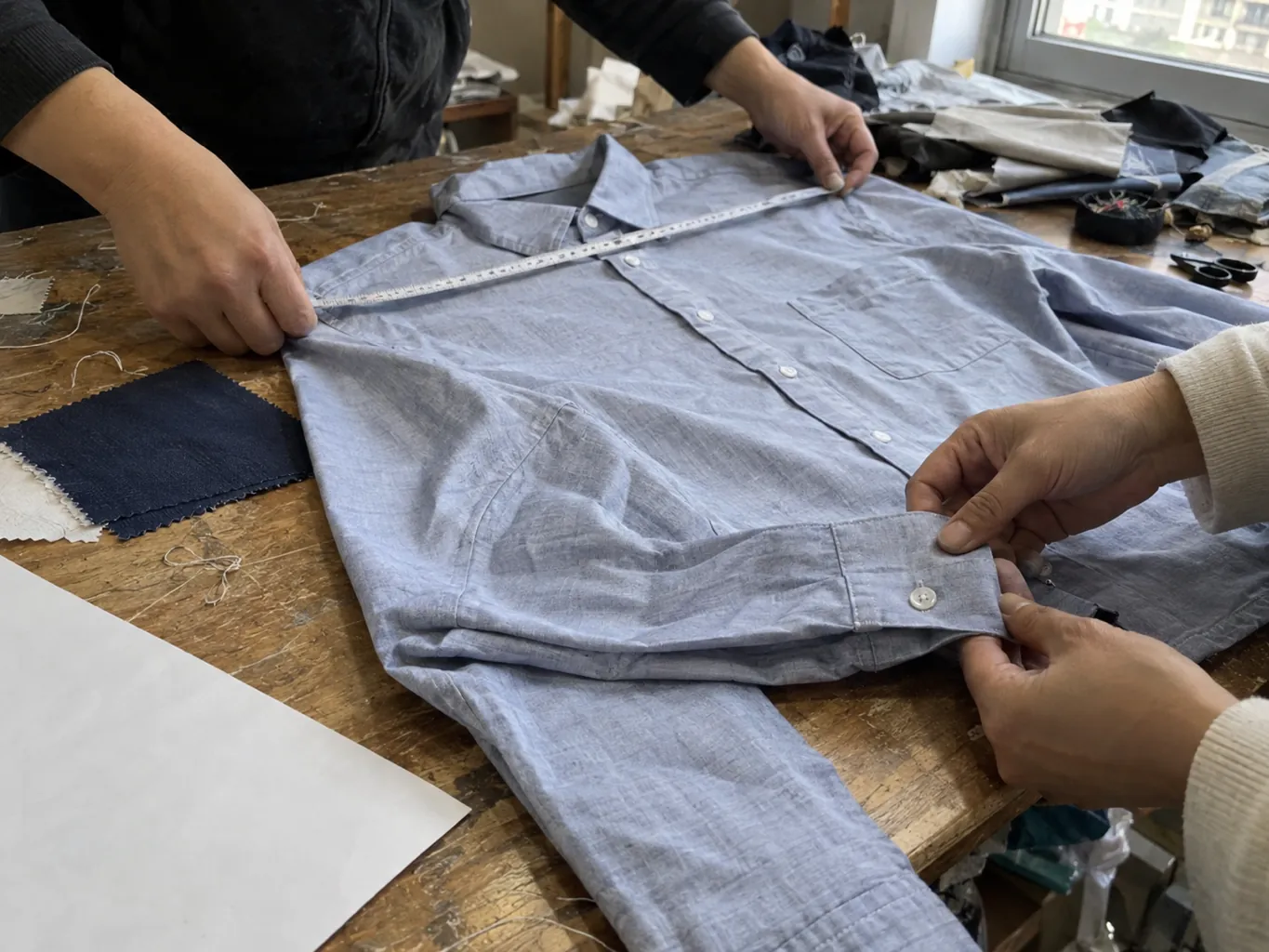
Before approving the sample, check fit, measurements, fabric, color, stitching, decoration, labels, and packaging requirements against your brief. Send one written list of changes and identify the sample that becomes the production reference. Do not ask for bulk production while the sample or artwork version is still undecided.
How should you interpret capacity by garment type?
For Canton Fashion’s partner-factory network, a reference monthly capacity is about 30,000–50,000 T-shirts or sweatshirts, compared with about 10,000–20,000 dresses or suits. These figures cover different kinds of work. They do not guarantee capacity for every design or month.
Ask the supplier to assess your actual pattern, fabric, decoration, quantity, and deadline. A style with additional construction or finishing needs may take a different production route. The answer you need is a schedule for your order after sample approval, not the largest monthly number on a company profile.
How Should You Compare Clothing Manufacturing Quotes and Delivery Terms?
Compare quotes only after every supplier prices the same garment, quantity, packaging, inspection scope, and delivery terms.
A lower unit price can reflect a different fabric, omitted label, simpler decoration, or an inspection cost outside the quote. Put each offer into the same sheet and leave a cell open when the supplier has not answered. Ask for a revised quote after you resolve the gaps. Do not infer a Canton Fashion unit-price range from its MOQ or sample fee; finished-garment pricing needs a defined style and specification.
| Item to align | Your agreed requirement | Supplier A’s answer | Supplier B’s answer |
|---|---|---|---|
| Garment and approved reference | Style, measurements, sample version | ||
| Fabric and trims | Composition, weight, color, labels | ||
| Decoration | Artwork version, process, placement | ||
| Quantity | Styles, colors, sizes, MOQ basis | ||
| Packaging | Bag, hangtag, carton requirements | ||
| Sample and setup costs | What is charged separately | ||
| Inspection | Standard, stage, inspector, fee | ||
| Schedule | Start condition and completion point | ||
| Communication | Time to a useful reply and follow-up answers | ||
| Delivery | Quoted shipping or handoff terms | ||
| Payment | Deposit, balance, shipment condition | ||
| Quote scope | Inclusions, exclusions, validity |
Which specifications and quantities must match across quotes?
Use the same tech pack or reference, fabric direction, measurements, decoration file, color list, and size breakdown. Ask each supplier to state the quantity used for its unit price and whether a different split changes the MOQ. For a 100–500-piece trial order, the split across styles and colors may matter as much as the total.
If a supplier proposes an alternative fabric or process, record it as an alternative quote. That may be a useful option, but it should have its own specification and sample approval. Otherwise you cannot tell whether a price difference comes from production efficiency or a different garment.
Which setup and packaging charges should appear separately?
Ask about sampling, pattern or artwork setup, decoration preparation, labels, hangtags, bags, cartons, and any sourcing or inspection charges. Record whether each item is included in the unit price, billed once, or priced later. If packaging changes after approval, ask how that affects the quote.
Custom packaging has its own schedule. In one Canton Fashion order, a buyer requested a custom zipper bag near shipment. Producing the bag would have taken about 3–4 weeks. A quote that omits the bag cannot be compared with one that includes it and its lead time.
How do you weigh a lower price against different timing or payment terms?
Place price next to the date, inspection access, payment points, and delivery scope on your sheet. Ask who pays for an agreed inspection and when the report will be available. Ask whether the completion date means goods finished at the factory, packed for collection, or handed to a carrier.
Check each offer against your own constraints. A quoted saving is only relevant if the garment matches your approved specification and the payment and handoff terms work for your launch. Get any negotiated change reflected in the revised quote and order documents before paying.
What Must Be Confirmed Before You Pay a Deposit?
Approve the production version, inspection rights, payment points, and shipment condition in writing before sending funds.
For new Canton Fashion customers, the deposit is 30%. The buyer may inspect the goods before shipment; the balance must be paid before the goods ship. Established customers may be offered 30–60 days to pay the balance depending on the result of a Sinosure credit check. That later-payment arrangement is conditional, so a new buyer should plan around the stated new-customer terms unless a different arrangement is confirmed.
Check that the invoice, order document, and latest specification refer to the same garment and quantity. Ask which person can approve a production change and where the decision will be recorded. Do not rely on an earlier chat message when a later sample or file has replaced it.
How should the order identify the sample, tech pack, and final logo file?
Give the approved sample an identifiable reference and list the tech pack and artwork files by name and version. State which measurements, fabric, color, labels, packaging, and placement instructions control production. If a physical sample and written file differ, resolve the difference before the deposit or production start.
For every revision, send the updated file and ask the supplier to confirm what has been superseded. This is especially important for a logo: a correct print of an outdated file still produces the wrong brand presentation.
How do the 30% deposit, pre-shipment inspection, and balance fit together?
Under Canton Fashion’s new-customer terms, the buyer pays a 30% deposit, may inspect before shipment, and pays the remaining balance before the goods ship. Ask for the planned inspection point and the process for discussing findings while the goods are still available for review.
If you arrange an outside inspector, agree on the scope and timing early. The order should identify the payment and shipment conditions that both parties accept. Do not assume that an inspection automatically changes an agreed payment deadline; put any such change in writing.
How should both sides record changes or delays?
Keep the original requirement, the requested change, the person approving it, and its effect on price or schedule in the same written thread or order record. Confirm whether the change applies to sampling, bulk production, packaging, or shipment. Ask for an updated completion date when the change affects materials or production.
Keep a dated change record so both sides follow the same instructions. If the finished goods differ from an earlier sample, that record shows whether the difference was approved or came from a production error.
How Do You Lock Down Samples, Inspection, and Packaging Before Production?
Confirm the final artwork, acceptable defects, and packaging files before bulk production starts.
Three orders known to Canton Fashion show where a buyer’s decision can arrive too late: a logo version was not settled before bulk production, inspection expectations were not agreed before the final check, and custom packaging was requested near shipment. Put each approval in the order record.
What if the final logo version was not approved with the sample?
In one order, the buyer urged bulk production before the sample and final logo version were confirmed. The factory used a logo version that differed from the one eventually displayed on the brand’s website. The issue was not described as a garment-quality defect, but it affected how the finished product matched the brand presentation.
Before authorizing bulk production, name the final logo file, confirm its placement and appearance on the sample, and get acknowledgment that earlier versions are withdrawn. If the website artwork changes afterward, treat that as a production change that needs a new decision.
How do you agree on an inspection standard before ordering?
In another order, a buyer had not communicated the inspection standard in advance. At final inspection, the buyer raised details beyond what Canton Fashion understood to be the standard for ordinary consumer apparel. The batch could not be released. In Canton Fashion’s account, the goods would have passed under the AQL 2.5 and 4.0 consumer-goods criteria discussed for that case.
Those AQL figures are case context, not a default standard for every order. Before production, agree on the inspection method, which defects count, any measurement tolerances, and who decides whether goods pass. If your brand requires a different standard, state it while the supplier can still price and produce to it.
When must custom bags, hangtags, and artwork be finalized?
A buyer confirmed an order without settling its packaging. Near shipment, the buyer requested a custom zipper bag, whose production would have taken about 3–4 weeks. There was not enough time, so the order shipped in plain transparent bags without a logo.
Confirm packaging and hangtag designs when you confirm the order. Give the supplier final files and ask when each packaging component must be ready for the production schedule. If a component is undecided, do not assume it can be added at the packing stage.
Which inspection makes sense for a small order?
For small orders, Canton Fashion generally recommends a final inspection rather than a separate pre-production inspection. Its reference inspection fee is usually US$100–200 per person per day, whether discussing a pre-production, in-production, or pre-shipment visit. Agree on the inspector’s task and report before booking the visit.
Your approved sample and written standard still matter if you choose only a final inspection. The inspector needs a reference for measurements, appearance, labels, and packaging. Confirm that the inspection happens before the balance is paid and shipment is released under the agreed order terms.
What 15 Questions Should You Ask Before Paying a Clothing Manufacturer?
Ask these 15 questions, record each answer, and request evidence tied to your garment and order.
Send the same questions to each shortlisted supplier. Keep the answer and supporting file or written confirmation in adjacent columns. A supplier may need more detail than your first style reference before it can answer a capacity or price question precisely. Record what it needs and follow up on the same basis with every candidate.
Identity and capability: who will make and manage your order?
| Question to ask | Answer to record | Evidence or confirmation to request |
|---|---|---|
| 1. Who will sign my contract and issue the invoice? | Legal contracting entity and order contact | Company details and draft order document |
| 2. Which factory is proposed to produce my garments? | Proposed production site and how the supplier coordinates it | Site identity and written production arrangement |
| 3. Can I view the site or arrange an audit? | Visit options, scope, timing, and fee | Visit plan or audit proposal |
| 4. Which factory holds the relevant certification? | Document holder and site it covers | Current document for the proposed site |
| 5. Have you made a similar style, and what capacity and schedule apply to mine? | Relevant process, current slot, proposed dates | Relevant sample discussion and written schedule |
A certificate, past style, or monthly output figure needs to relate to the factory proposed for your order. For a partner-factory coordinator such as Canton Fashion, also ask who will tell you if the production site changes.
Specifications and quote: are suppliers pricing the same garment?
| Question to ask | Answer to record | Evidence or confirmation to request |
|---|---|---|
| 6. Is MOQ calculated by style, color, size, or another unit? | Accepted quantity breakdown | Written MOQ in the quote |
| 7. What details do you still need from my style reference? | Unresolved fabric, fit, artwork, or construction decisions | Written question list or marked-up brief |
| 8. How long will sampling take, and what will it cost? | Start condition, fee, and expected completion | Sample quote and schedule |
| 9. Which fabric, trims, processes, and packaging are included? | Inclusions and exclusions | Itemized quote and specification |
| 10. When can bulk production finish after sample approval? | Start condition and completion point | Production schedule for this order |
For Canton Fashion, 100 pieces, 7–14 days for sampling, US$50–150 per sample, and roughly 30–45 days for bulk after sample approval are useful starting references. The supplier’s answer should still address your particular garment and quantity.
Delivery and responsibility: what happens after approval?
| Question to ask | Answer to record | Evidence or confirmation to request |
|---|---|---|
| 11. Which sample and logo file are the final production versions? | Approved references and file names | Written approval record |
| 12. What standard applies, and when can the goods be inspected? | Defects, tolerances, inspection point | Agreed inspection instructions |
| 13. When must packaging and hangtags be approved? | Final-file deadline and production time | Packaging specification and schedule |
| 14. What are the deposit, balance, and shipment conditions? | Payment amounts and release condition | Invoice and agreed order terms |
| 15. Who coordinates changes or delays, and how will I be informed? | Responsible contact, notice method, and effect on the order | Written communication or change record |
Check who owns each decision as you compare prices. If a supplier has not identified the final artwork, inspection standard, or packaging deadline, those are open production decisions. Resolve them before treating its quote as ready for a deposit.
What Should You Send Canton Fashion When You Are Ready to Request a Quote?
Start with your planned quantity, whether you will sell online or in physical stores, and a comparable garment style.
A tech pack is useful if you have one. If you do not, send a product link or reference images and say which details you have not decided. Canton Fashion can follow up on the information needed to discuss sampling and a firmer production quote. The usual response target provided by the team is within one working day.
Use the inquiry form on Canton Fashion’s website, or message the team through the WhatsApp button on this page. Send the same starting information whichever channel you choose so the conversation stays tied to your project.
Which files and order details should you prepare?
Start with the comparable style and planned quantity. State whether the garments are for online sales or physical stores. Add any details you already know, such as colors, size range, fabric preference, artwork, packaging, delivery country, and target date. A tech pack, front and back views, or a physical reference garment can help if you have them; they are not prerequisites for the first inquiry.
Mark open decisions clearly. For example, tell the team if you need help choosing fabric or if the logo file is still being finalized. That lets the first reply focus on what must be settled before a sample and quote can be confirmed.
What happens after you submit an inquiry?
A team member reviews your style reference, quantity, sales model, and any other details you provided, then asks for what is missing. The next useful step may be a sampling discussion, a request for a physical reference, or a clearer quantity breakdown. A first reply is not a promise that every specification or deadline is already approved.
Send Canton Fashion your target quantity, sales model, and comparable style.
Ask what else it needs to advise on sampling and prepare a quote you can later compare with other suppliers.
Frequently Asked Questions
Does a partner factory’s BSCI document cover my order?
Only if the document applies to the factory proposed for your order. Check its holder, site, scope, and validity information, and confirm which factory will produce your garments.
When does the bulk production timeline start?
Canton Fashion’s usual bulk production period of about 30–45 days starts after sample approval. Ask for a schedule based on your order’s materials and processes.
How can I tell why two suppliers quoted different prices?
Compare revised quotes for the same garment specifications, quantity breakdown, packaging, inspection scope, and delivery terms. Ask each supplier to state what its price includes and excludes.
Can I inspect the goods before paying the balance?
Under Canton Fashion’s new-customer terms, you may inspect the goods before shipment, and the balance must be paid before the goods ship. Agree on the inspection scope and timing in the order documents.