Services/Custom Apparel Development & Manufacturing
OEM, ODM & private label clothing
Custom Apparel Development & Manufacturing
Start with a tech pack, physical sample, measurements or an early product idea. We make the missing decisions visible before sampling and production move forward.
Starting point
Choose the Starting Point
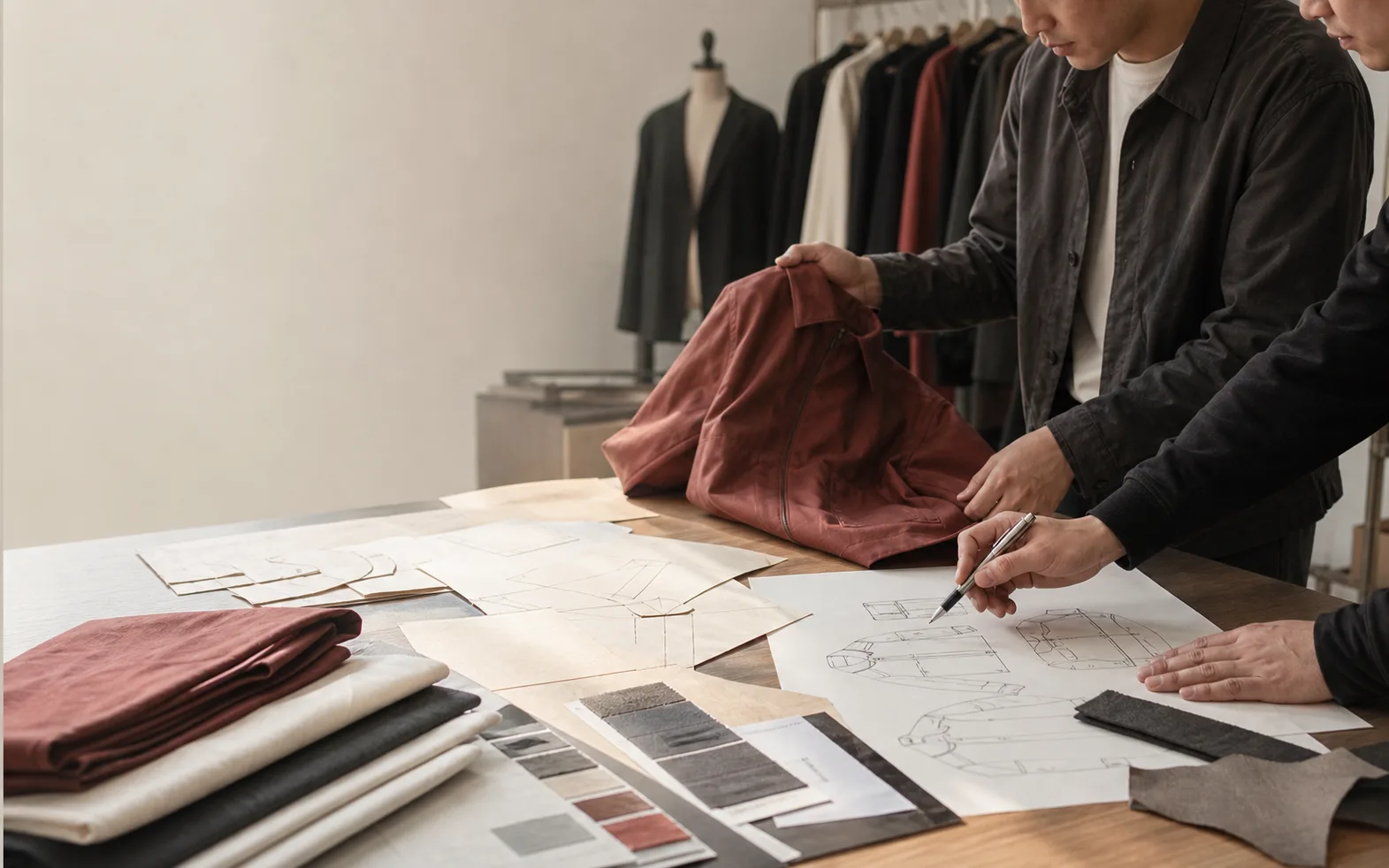
This route is for the full garment project. The first task is to separate what is already decided from what still needs development.
- OEM — Use this path when you already have a tech pack, sample, measurements or defined specifications.
- ODM-style support — Use this path when you have images, ideas or partial specs and need help turning them into a workable garment.
- Private label details — Keep labels, hangtags, packing and visible brand details tied to the approved garment.
- Fixed by buyer — Reference, quantity, target market, sizes and visible priorities.
- Needs review — Missing construction, material, sampling, brand-detail or production handoff decisions.
Buyer inputs
What to Send First
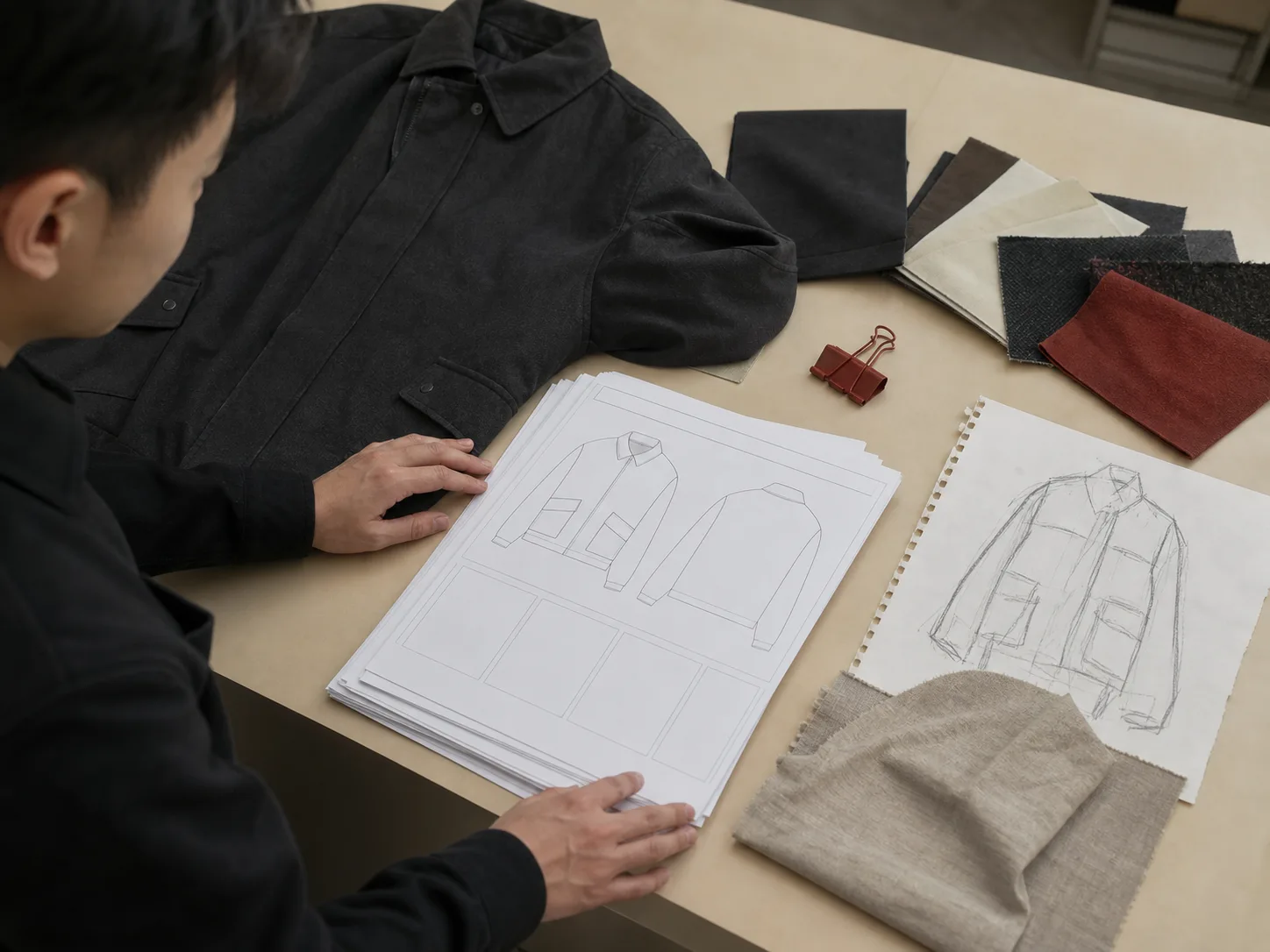
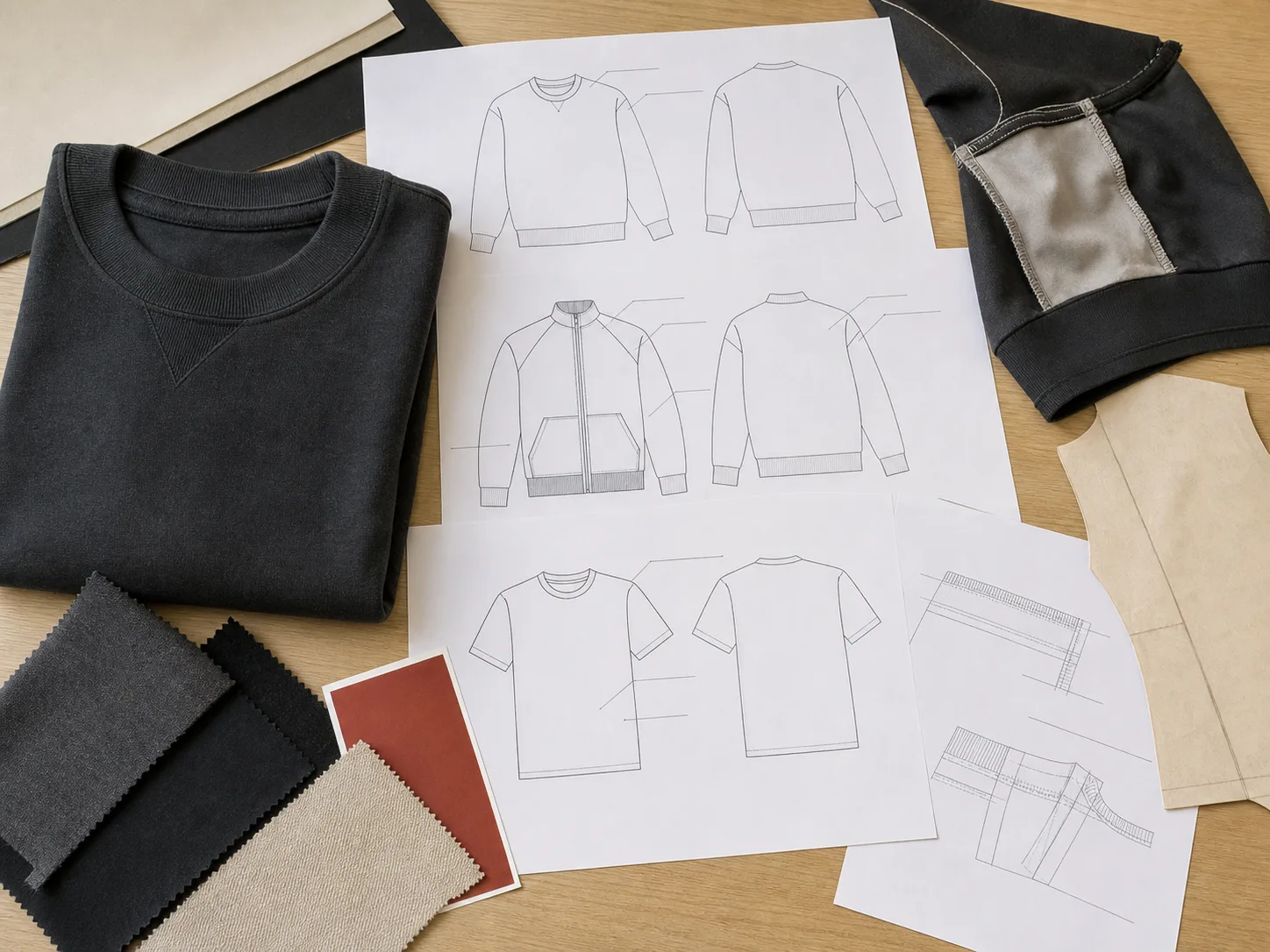
A useful first review shows the product, quantity and open decisions together.
- 01
Reference or file
Tech pack, sample garment, measurements, sketch, product photo or a clear idea.
- 02
Development scope
Mark what is fixed and what you still need help deciding.
- 03
Material direction
Fabric type, handfeel, GSM direction, colour or trim reference if you have one.
- 04
Quantity and timing
Style count, colour and size plan, destination country and target launch date.
- 05
Brand details
Labels, hangtags, packaging and other visible details that should follow the garment.
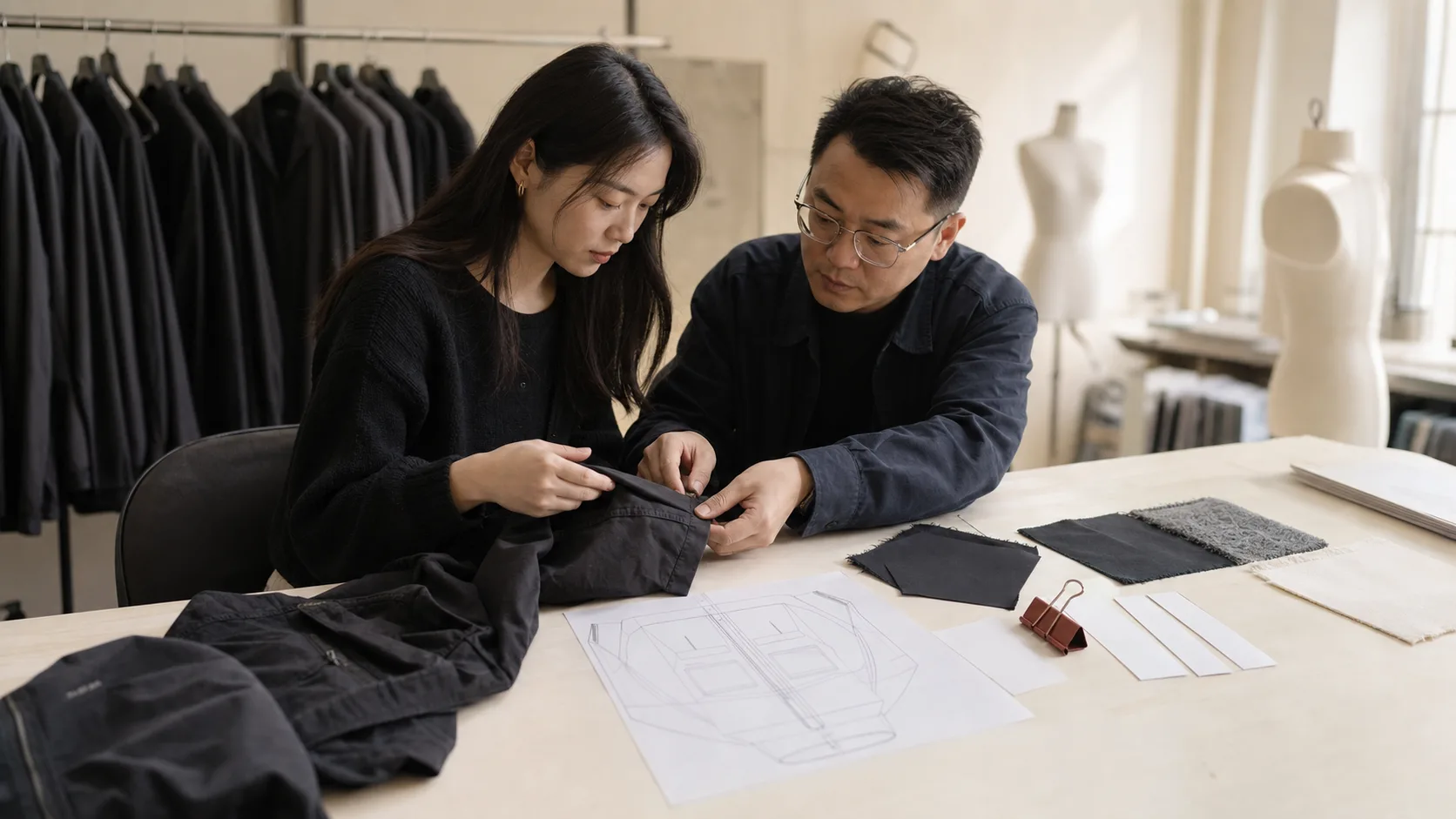
Production path
From First Review to Production Handoff
The route keeps development, sampling and approval in sequence so production does not move forward on unclear information.
- 01
Review starting information
Check what is already clear and what is still missing.
- 02
List open decisions
Separate product, material, fit, brand detail and timing questions.
- 03
Prepare inputs
Connect pattern, sample and material work only after the scope is visible.
- 04
Review sample and details
Check fit, construction, material and visible brand details together.
- 05
Handoff for bulk
Move only approved information into production planning.
Outputs
What This Route Leaves Clear
The outcome is a cleaner project file and a better production handoff, not a vague promise that everything is possible.
Project decision list
A clear view of what the buyer provides, what needs review and what must be approved.
Development scope
The garment, material, sample and brand-detail work are tied to one project route.
Production handoff points
Approved sample, measurements, materials, labels, packing and timing are kept visible.
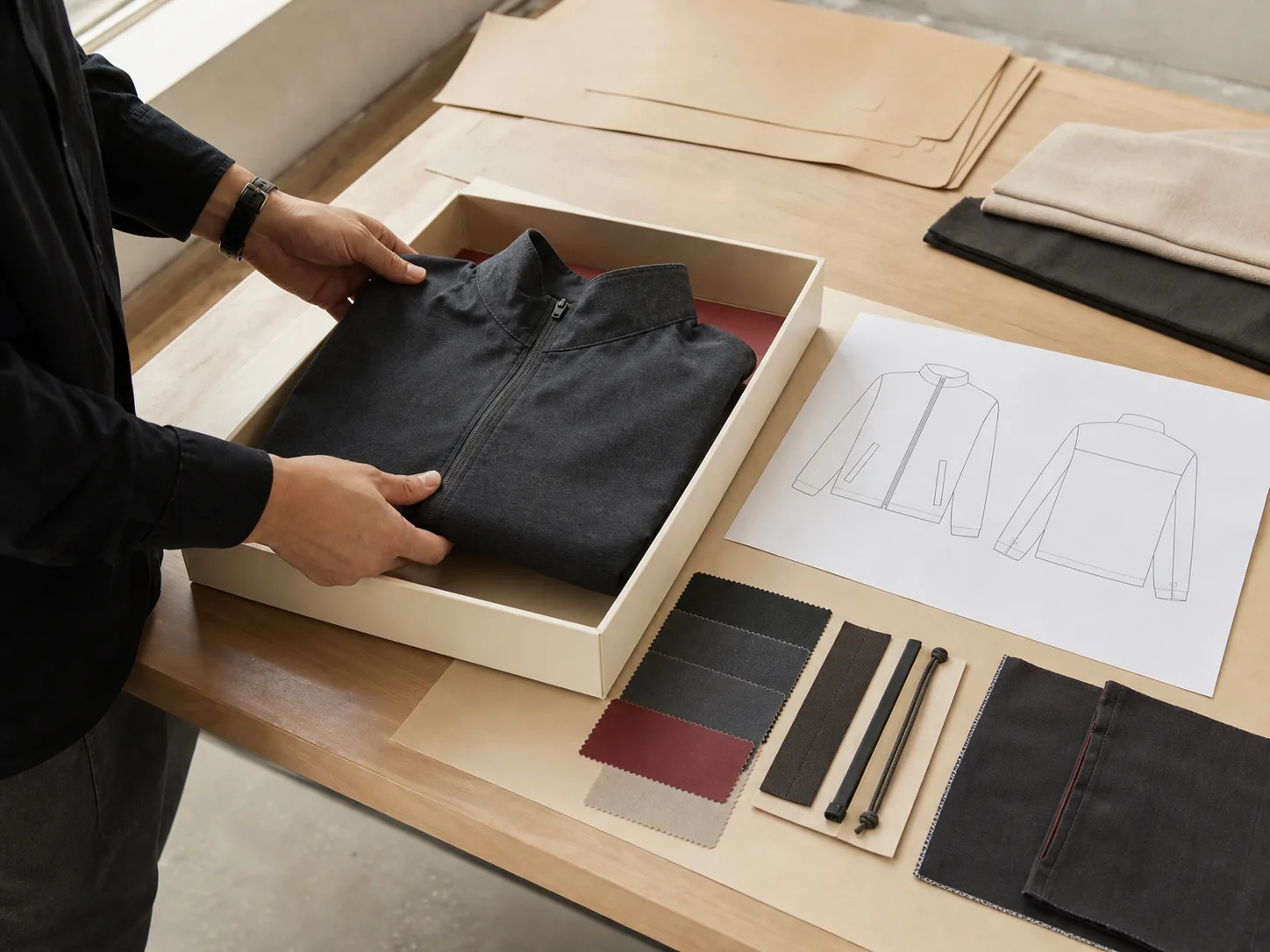
Keep visible
- 01
Evidence by request
Relevant client references, partner-factory documents and inspection records are shared when they apply and permission allows.
- 02
Project-specific quote
MOQ, price, lead time and material options are confirmed from the real brief.
Common questions
Questions Before Development Starts
These questions decide how quickly a project can move from idea to sample.
Do I need a tech pack?01
No. A sample, measurement sheet, photo reference or structured brief can start the discussion.
Is this different from sampling?02
Yes. This page defines the whole garment project first; sampling is the technical route after the direction is clearer.
Is private label a separate service?03
No. Labels, hangtags and packing are handled with the garment so they stay tied to sample approval.
What affects the quote?04
Style, material, colour count, size range, decoration, packing, quantity, timing and delivery country.