Services/Fabric & Trims Sourcing
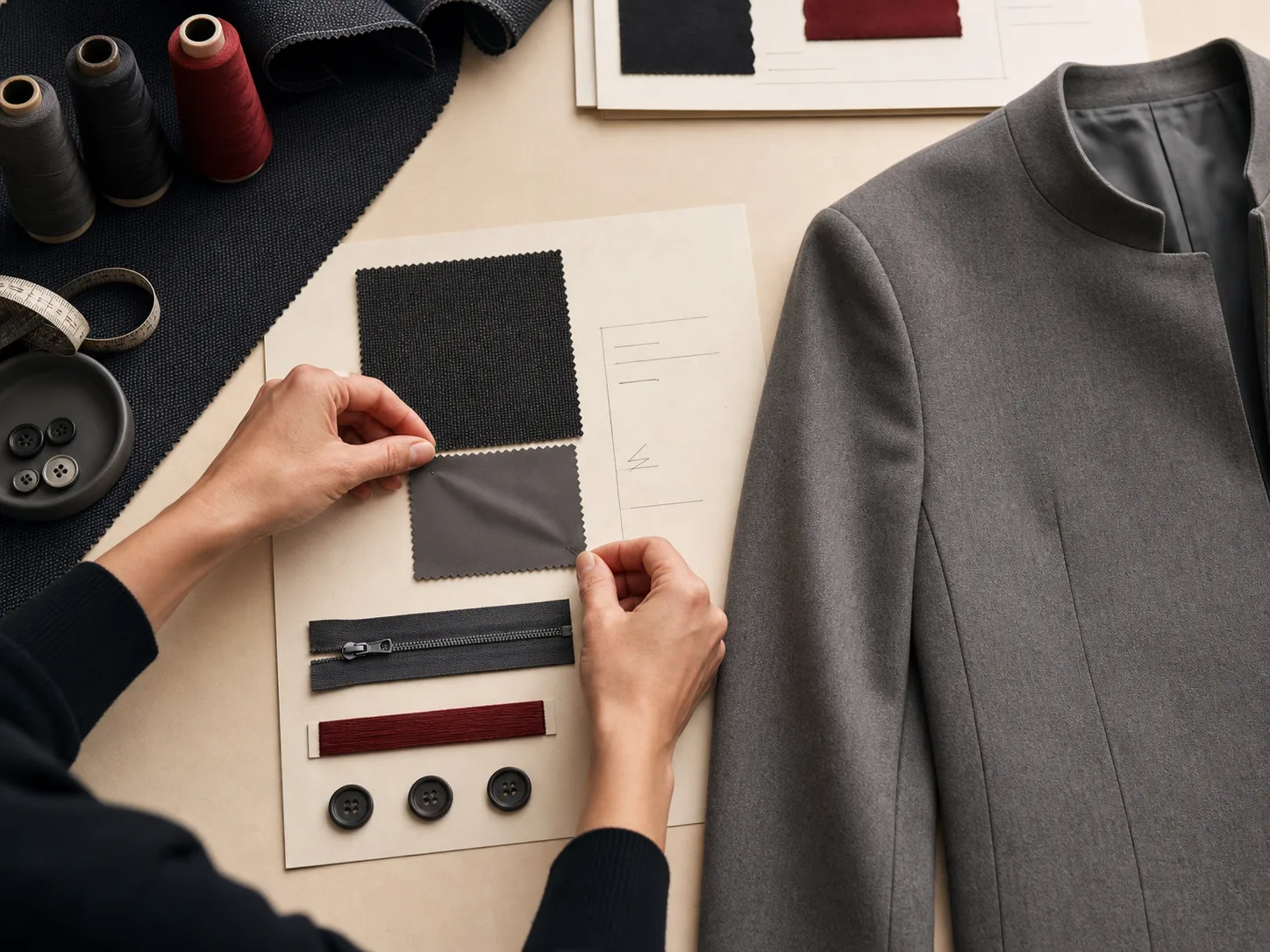
Fabric and garment component review
Fabric & Trims Sourcing
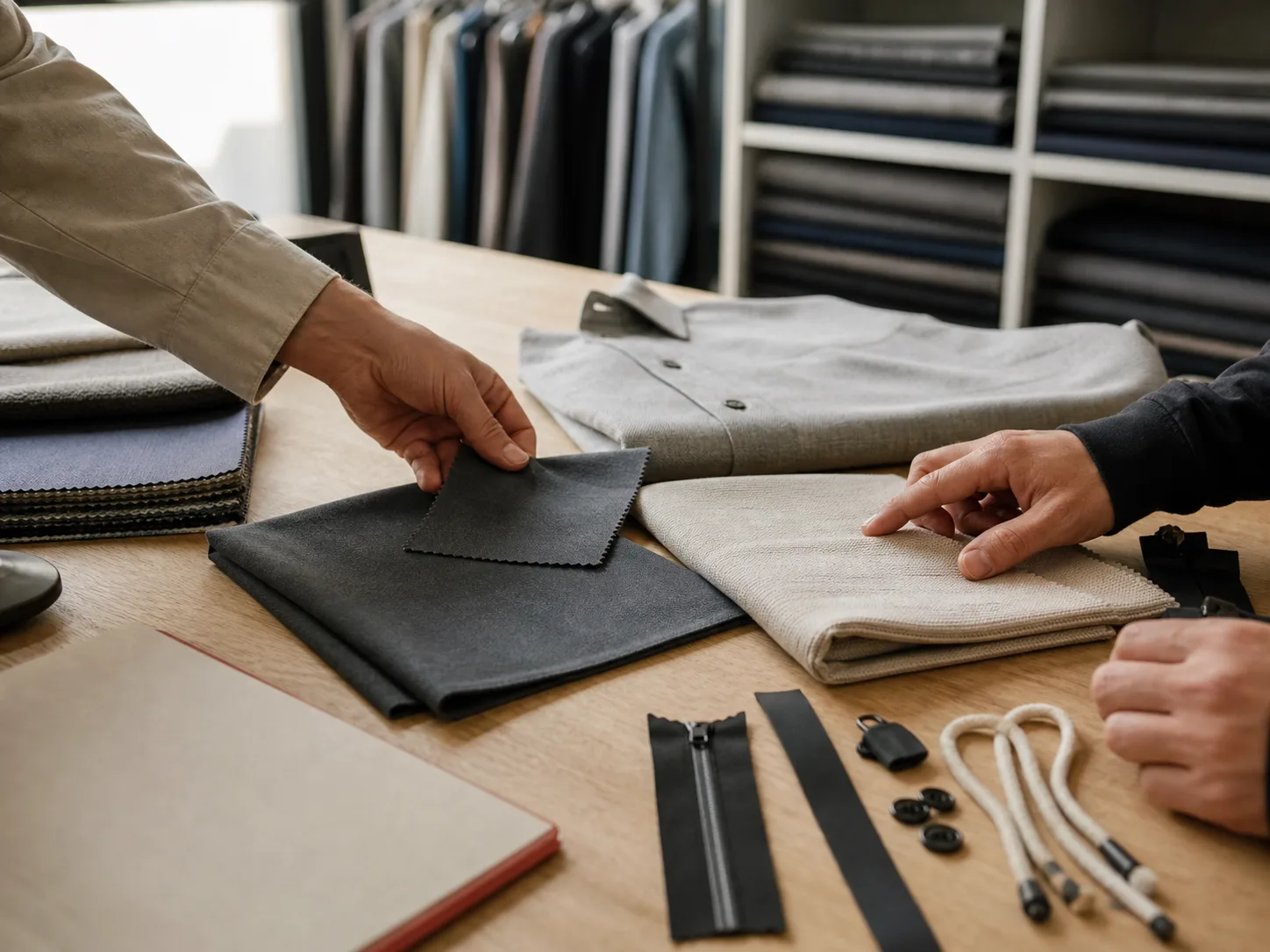
Compare fabric, colour, trims and garment components against the actual product brief before they are used in sampling or bulk production.

Scope
Fabric, Trims, Not Finished Accessories
This service covers materials and garment-building components. Finished accessories are a different sourcing route.
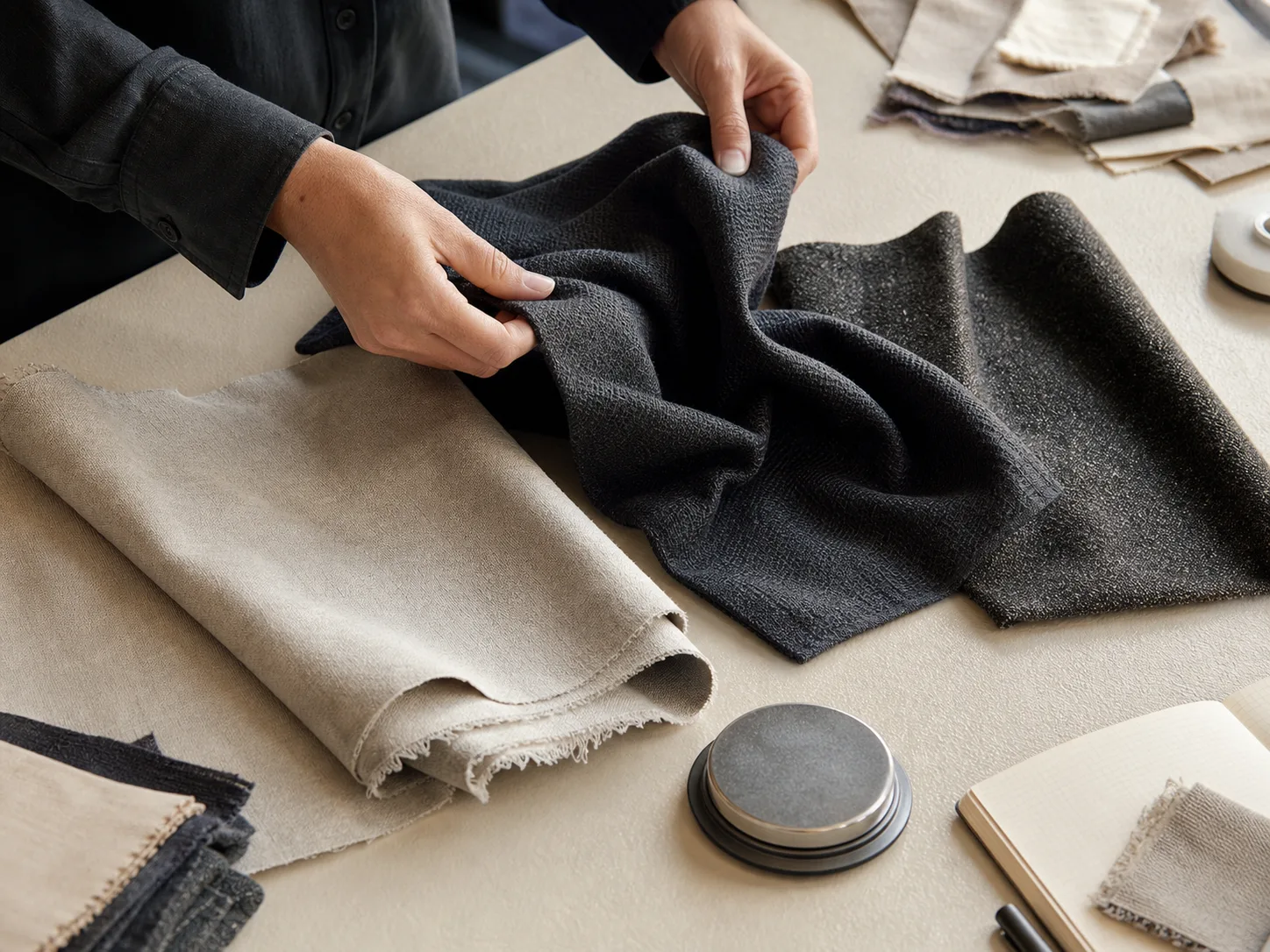
- Fabric — Composition, handfeel, weight, colour, stretch, drape and availability.
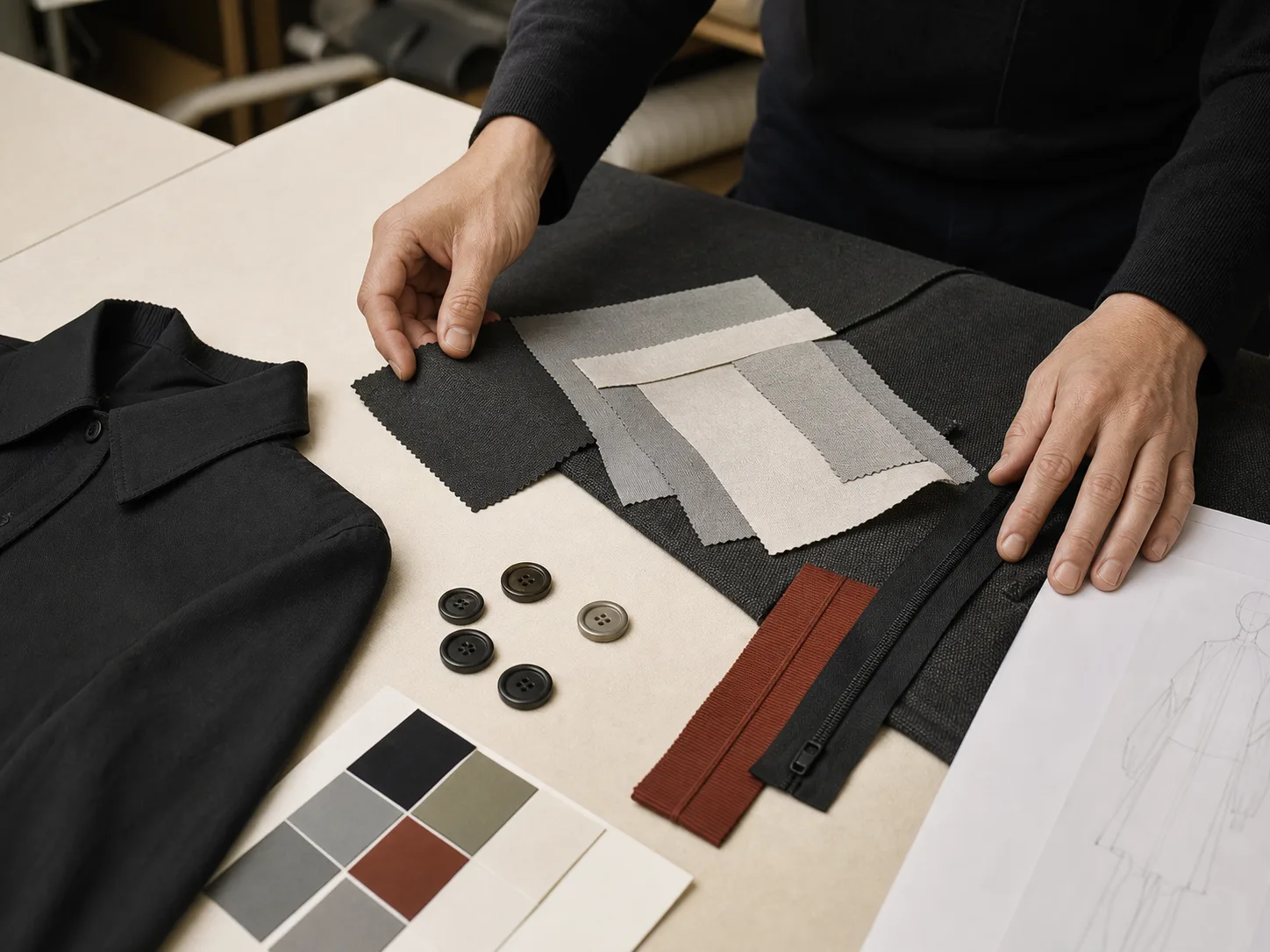
- Garment trims — Zips, buttons, elastic, rib, lining, drawcords and other functional garment parts.
- Labels in garment context — Care labels and main labels are reviewed with the product they belong to.
- Not finished accessories — Bags, scarves, hats, belts and independent add-ons belong to Fashion Accessories Sourcing.
- Not photo approval — A photo can start the search, but physical review is needed for colour, handfeel and drape.
Material brief
What to Compare
The right material depends on garment use, handfeel, colour, construction and quantity.
- 01
Garment use
Daily wear, activewear, occasionwear, outerwear or another use case.
- 02
Handfeel and weight
Soft, crisp, heavy, fluid, warm, cool, stretchy or other tactile direction.
- 03
Colour and finish
Solid colour, print base, wash effect, visible texture or colour reference.
- 04
Trims and components
Zips, buttons, rib, elastic, lining, drawcords, labels and other garment parts.
- 05
Quantity and destination
Material options must be realistic for the planned order and delivery country.
Sourcing route
From Material Direction to Approval
The route keeps reference, comparison and buyer approval in order.
- 01
Review the garment use
Clarify how the material must perform in the actual product.
- 02
Find realistic options
Compare available fabric and trim options against quantity and price context.
- 03
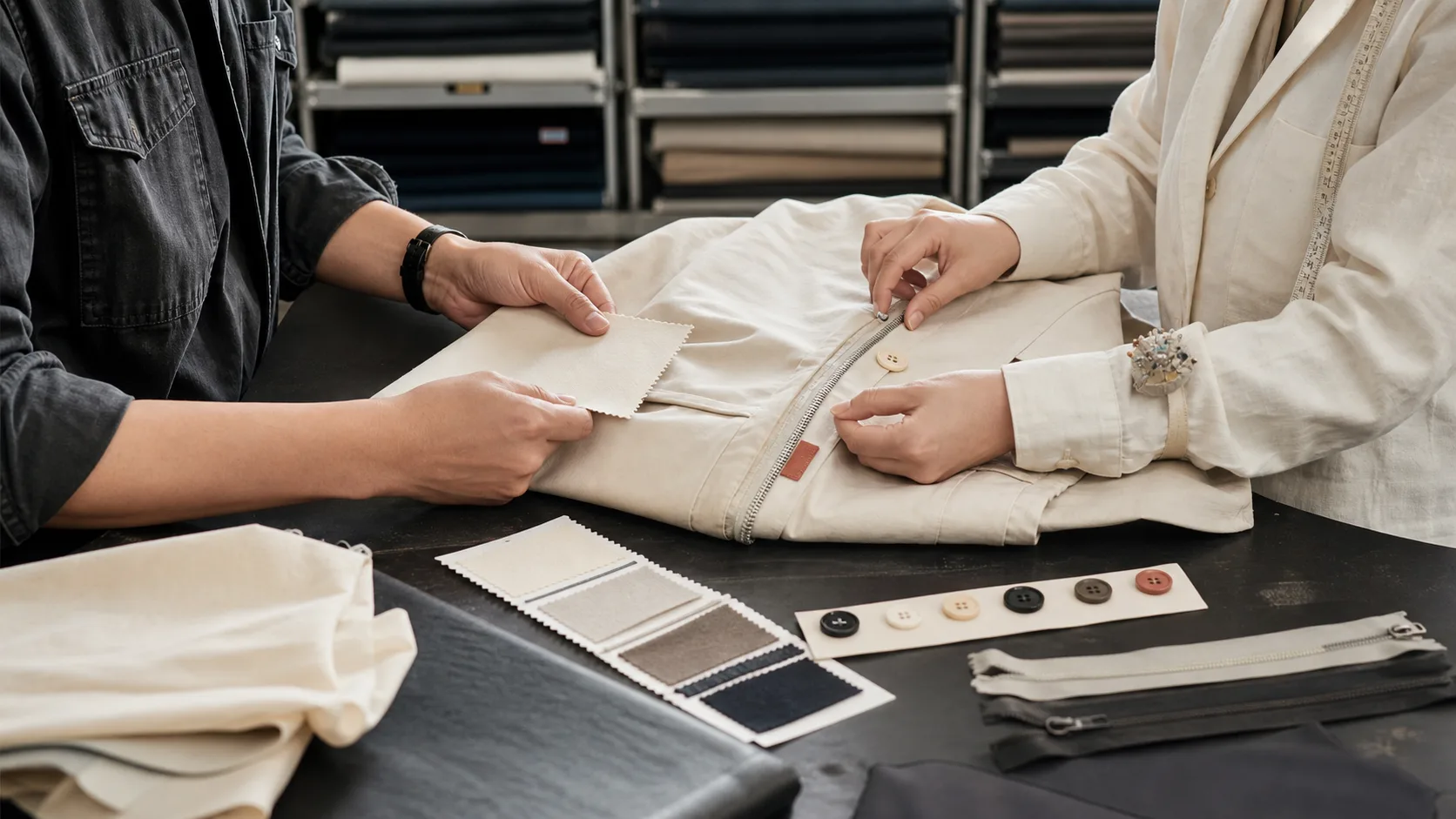
Compare swatches
Check handfeel, colour, drape, composition and GSM direction physically where needed.
- 04
Review garment compatibility
Make sure the material works with the pattern, construction and finish.
- 05
Approve for use
Confirm the selected material before sampling or bulk production.
Outputs
What You Can Approve
Material sourcing should leave a usable approval record for the next production step.
Material options
Fabric and trim options that match the garment direction and order context.
Comparison notes
Handfeel, colour, composition, GSM direction, availability and risk points.
Approved direction
A material decision that can move into sampling or production planning.
Keep visible
- 01
Minimums
Fabric and colour minimums can affect what is workable.
- 02
Testing needs
Some projects need composition, colourfastness or destination-market checks.
Common questions
Questions Before Material Approval
Material answers change with the garment, colour, quantity and destination market.
Can a photo decide the fabric?01
No. Photos are useful references, but touch, drape, colour and weight should be reviewed physically when they matter.
Should AI choose GSM and fabric?02
No. A real sample you like is a better starting point for discussing composition, GSM and handfeel.
Are trims part of this service?03
Yes, if they are garment components such as zips, buttons, rib, elastic, lining or drawcords.
Are finished accessories included?04
No. Finished accessories are sourced as separate products with their own conditions.