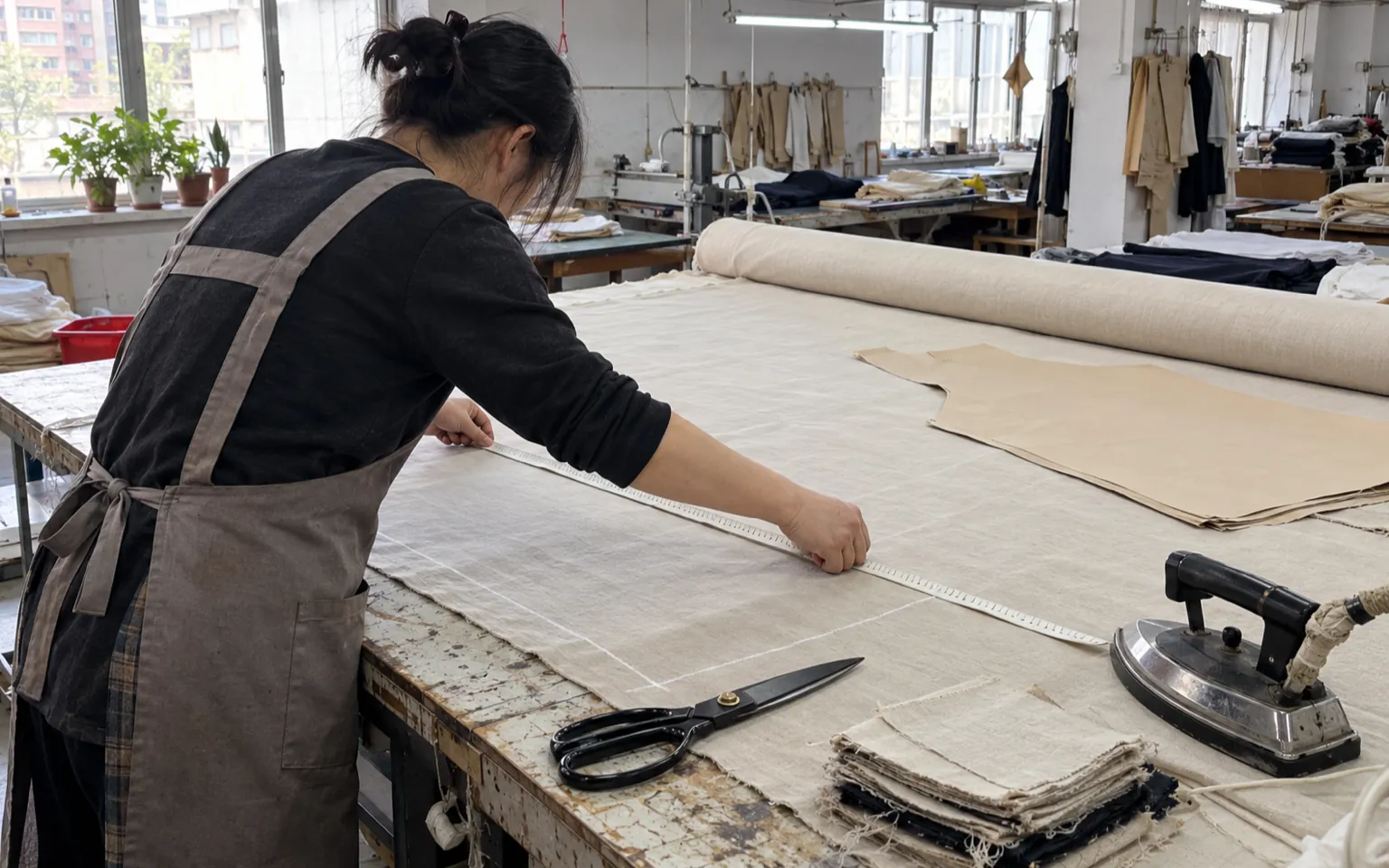
Why must shrinkage testing be completed before bulk cutting?
Once fabric has been cut, an incorrect shrinkage assumption cannot usually be corrected without affecting fit, construction, or material use.
The pattern is built on one assumption: how the fabric behaves through the agreed care process. If actual dimensional change differs, a garment may become too short, too narrow, twisted, or unbalanced. Over-compensate, and the intended silhouette can distort before washing.
Put shrinkage approval between fabric confirmation and cutting authorization. Fabric construction, finish, and mass all affect behavior. Our fabric and GSM selection guide explains why weight matters alongside structure and hand feel, not as a quality shortcut.
What goes wrong when testing happens too late?
Once pieces are cut, they are committed to one material response. Later pattern adjustments cannot correct that. Changing the care label is not a reliable rescue. The label still has to stay realistic for the product and customer. Late discovery can affect openings, sleeves, hems, pockets, and seams. Joined materials may also move unequally.
Why is “pre-shrunk” not a sufficient confirmation?
The term does not say what fabric state was tested, how it was tested, or how much dimensional change remains. Ask which finish applies, and whether the specimen actually represents that state. Approval depends on the documented result and written acceptance criteria.
Which fabric specimen should the brand test?
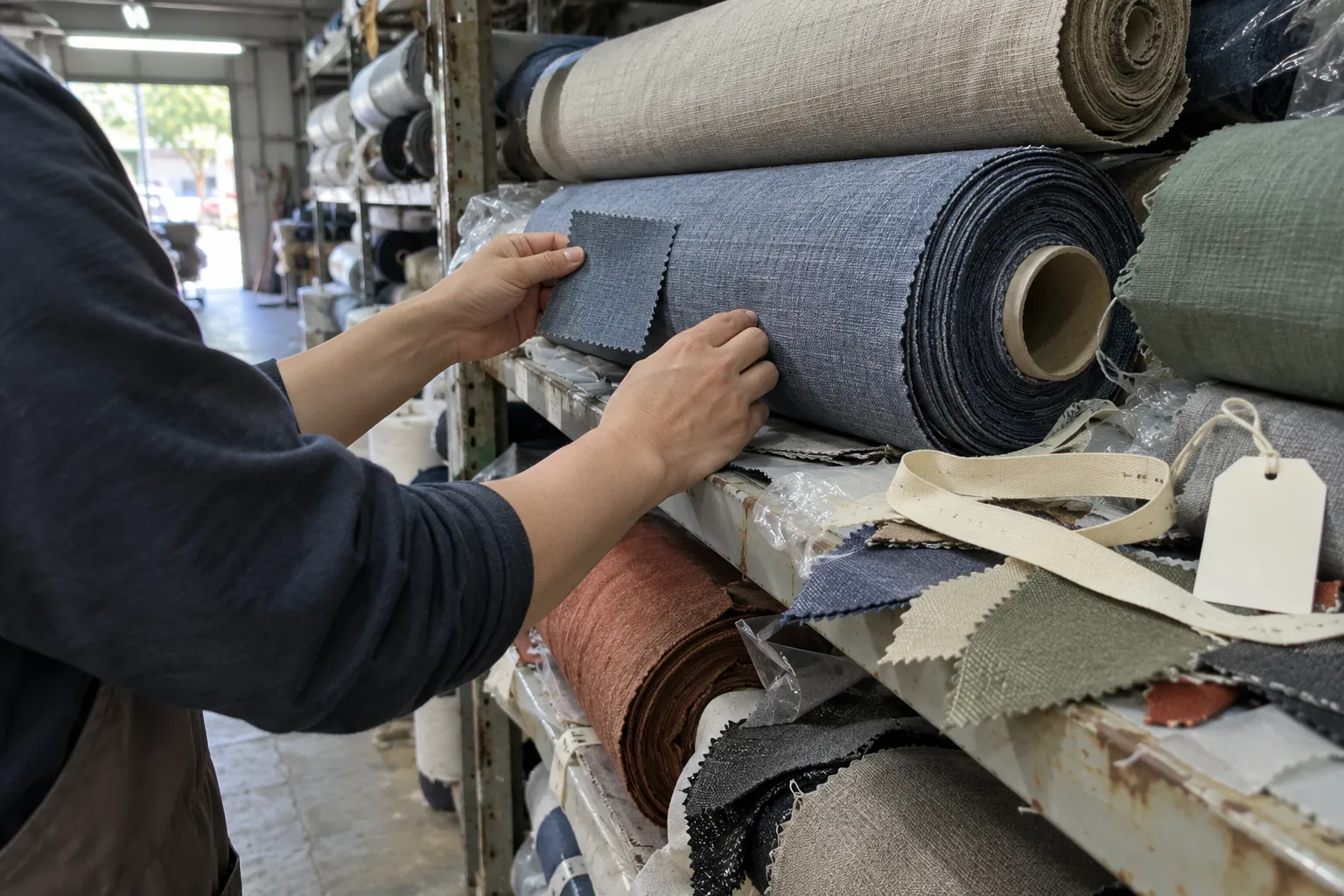
The tested specimen should be traceable to the intended production fabric in construction, colour, finish, and relevant lot or sample reference.
A result applies to that material, and nothing else. Record the fabric reference, colour, processing state, and lot or sample identification. If the final bulk fabric is not available yet, label development results as provisional.
Keep that identity aligned with the tech pack. A clear tech pack, built during the sketch-to-sample development process, ties the fabric specification, measurements, comments, and approval status to the right material version.
Does every colour need separate consideration?
Different colours can go through different dyeing and finishing conditions. Ask which evidence applies to each colour and lot. If you use a shared assessment, document the reason and references. Looking similar does not prove the fabric behaves the same dimensionally.
What about rib, lining, interfacing, and mixed materials?
Shell fabric, rib, lining, interfacing, contrast panels, and trims can respond differently when joined. Decide whether you need a garment wash trial. A fabric test does not prove seams, bonded areas, or layered components will stay compatible.
How should dimensional change be tested and recorded?
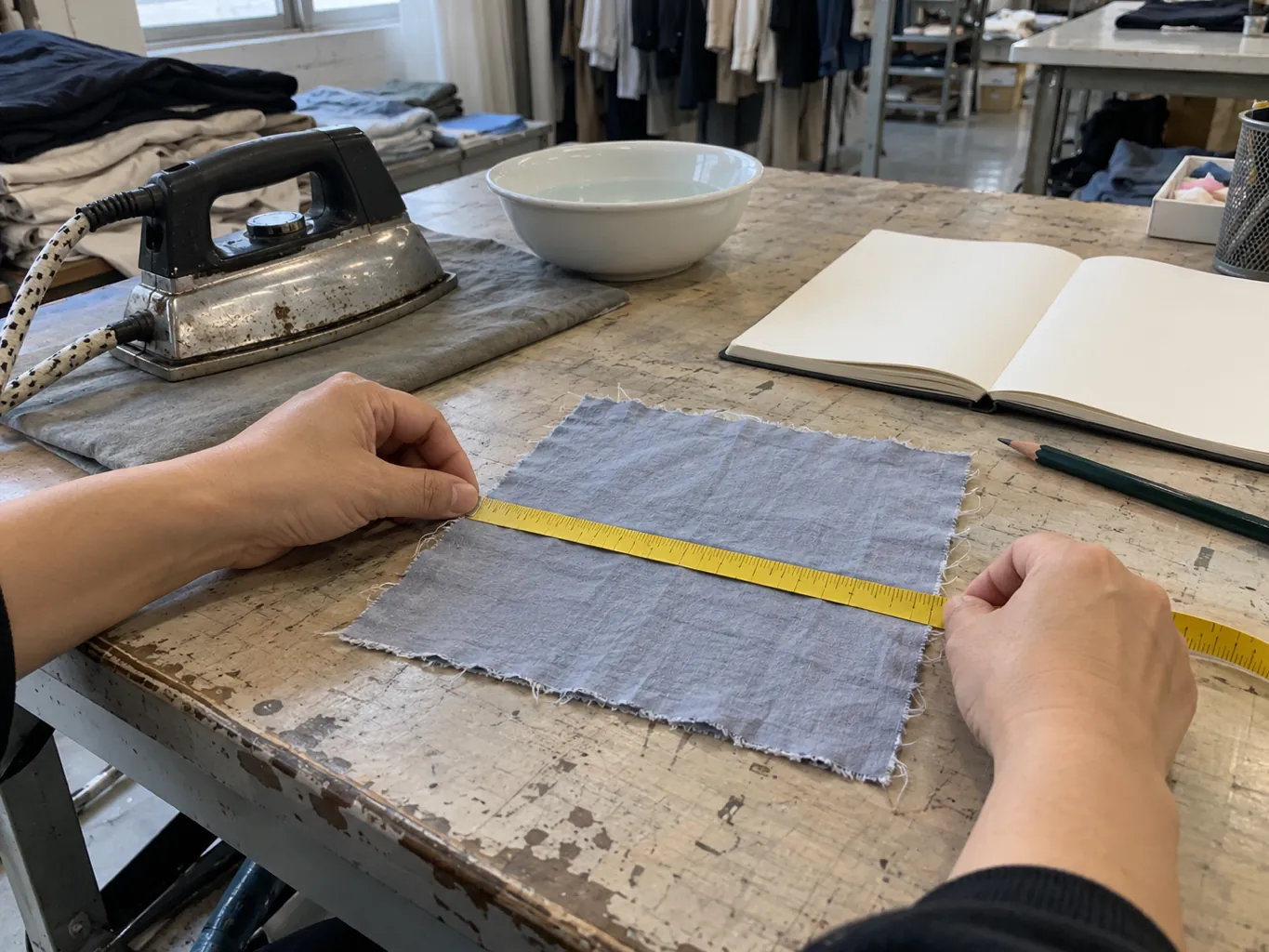
The brand and factory should agree a repeatable sequence for conditioning, marking, initial measurement, care, drying, recovery, and final measurement before testing starts.
ISO 3759, ISO 6330, and ISO 5077 can provide a framework for preparing, caring for, and assessing specimens. Naming a standard does not select the project’s procedure or acceptance criteria. Those still need written agreement.
The record should name who did the work, the specimen, prep before and after care, and the measured directions. Keep lengthwise and widthwise results separate. Also record twisting, bowing, waviness, surface change, or unusual hand feel.
How should measurement points be marked?
Marks must let you measure the same distances before and after care without changing fabric behavior. Document location, direction, measuring surface, and handling of tension. Do not stretch the specimen during final measurement. A diagram can help. It does not replace the written method.
Which care conditions should be used?
Match the procedure to the garment’s intended care. Record washing action, drying method, sequence, and condition at remeasurement. Confirm that factory settings match the material, proposed care label, and reasonable consumer use. If the care label changes, review whether the result remains relevant.
How does a test result become an approval decision?
Compare dimensional change in each direction with written acceptance criteria. Measurements do not pass themselves. An authorized brand representative must decide whether the behavior suits the style.
Link the decision to the fabric, report, pattern, measurement chart, and sample. If the result falls outside the agreement, revise the material or finish, retest, or update the pattern and specs before cutting.
How should shrinkage results inform pattern and garment measurements?
Confirmed material behavior should be applied deliberately to the pattern and measurement chart, not added as one blanket allowance to every dimension.
Grain direction, knit direction, seam construction, elastic edges, and layered materials can make garment areas respond differently. The pattern maker needs to know which result goes with which fabric state, and which finished dimensions are critical.
Keep shrinkage compensation separate from finished-measurement tolerance. Compensation anticipates material change through care. Tolerance defines acceptable manufacturing variation around a target.
Which garment measurements are most sensitive?
Sensitive points depend on the style. They may include body length, chest width, sleeve length, neck opening, shoulder position, hem opening, inseam, or functional-detail placement. Check impact on a worn sample. A change that looks harmless on a loose panel can matter at a close neckline or structured seam.
Can the pattern be adjusted before the test passes?
You can use a provisional adjustment for development, but it must stay labeled as an assumption. When a representative result comes in, compare it with the assumption and update affected documents. If the fabric, colour process, or finish changes, reassess.
Why is a garment wash trial also important?
A fabric specimen isolates material behavior. A garment trial shows how pattern pieces, seams, rib, interfacing, trims, and decoration interact. It can expose puckering, torque, distorted hems, or balance changes. Measure before and after care using the same method. Then compare fit and appearance with the approved reference.
What must be documented before cutting release?
Cutting should be released only when fabric identity, test method, results, acceptance, pattern status, and approval responsibility agree across the active documents.
The release package should connect identified production goods with the test report, written criteria, current pattern and measurement chart, care assumption, and approved sample. Give every item a clear revision or reference. Any conditional decision must say what is still open, who will confirm it, and where it will be recorded.
What belongs in the test record?
Record the fabric name or code, construction, composition, colour, lot or specimen reference, finish state, and test method. Add direction, initial and final readings, calculated change, visual observations, and decision. Say whether the report covers fabric or a finished garment, and which identified goods the approval covers.
How should substitutions and deviations be handled?
Any departure from the approved fabric needs review before cutting. Identify the reason, affected properties, and repeat checks. Matching fibre content or hand feel does not prove matching shrinkage. Test the substitute unless technical equivalence is supported and accepted in writing.
Who should authorize bulk cutting?
Name an authorized brand decision-maker and responsible factory recipient. Both should work from the same fabric reference, report, document versions, and open points. Record the date and applicable references. Route later changes through the same control.
What ten questions should brands ask before bulk cutting?
Brands should obtain ten written answers that connect the production fabric, test evidence, pattern response, garment trial, and release authority.
- Does the tested specimen match the intended production fabric in construction, colour, and finish?
- What treatment will the fabric receive after testing but before cutting?
- Which agreed method was used for conditioning, marking, measuring, washing, and drying?
- Does the care procedure match the intended garment care label and realistic use?
- Are lengthwise and widthwise change, torque, bowing, and visible distortion recorded separately?
- What acceptance criteria, agreed in writing with the factory, apply to this fabric and style?
- Which pattern and measurement-chart versions reflect the confirmed material behavior?
- Has a complete garment been measured and assessed after the agreed care procedure?
- How will the factory prevent an untested substitute or unidentified lot from reaching cutting?
- Who confirms in writing that every hold point is closed and bulk cutting may begin?
Store the answers with the cutting release. If an answer triggers a material, pattern, construction, or care change, update and recheck affected records before authorization. The evidence and the decision must point to the same product version.
How can Canton Fashion support shrinkage confirmation?
Canton Fashion coordinates material identification, sampling, test documentation, and approval steps with partner factories so brands can make an informed decision before bulk cutting.
We align the intended material, care assumption, fit priorities, and document status with your team. Then we coordinate information with the selected partner factory. The report supplies evidence. Your authorized reviewer decides whether it suits the product.
Typical MOQ is about 100 pieces per style per colour. Samples usually take about 7–14 days. Bulk production usually takes about 30–45 days after sample approval. Fabric testing, corrections, or renewed validation can push the schedule out. Knit capacity is approximately 50,000 pieces per month, subject to the confirmed style, material, and production plan.
What should a brand provide for a consultation?
Send the current tech pack, measurement chart and methods, intended care information, fabric requirements, available test records, and fit comments. Identify details as approved, provisional, or open.
If you have a reference garment, explain which qualities matter, such as hand feel, silhouette, recovery, or length. It can clarify intent but does not replace a traceable fabric specification or test result.
How is coordination handled before cutting?
Canton Fashion links the selected fabric reference to the sample and active technical documents. We coordinate the method, result format, and material status with the partner factory and organize the information for brand review.
Where adjustments are needed, we coordinate feedback to the pattern maker and factory and keep documents aligned. Cutting should begin only when the approved fabric reference and release status match.
Frequently Asked Questions
Is a shrinkage test on a similar fabric enough?
No. It can guide early development, but it does not confirm the intended production goods. A representative, traceable specimen should be assessed before cutting release.
Must dimensional change be checked in both fabric directions?
Yes, when both directions affect the product. Lengthwise and widthwise behavior can differ, so each should be recorded separately and compared with its written acceptance criteria.
Does ISO 5077 provide the acceptance limit?
No. It supports determination of dimensional change but does not set the project-specific result that a brand must accept. Acceptance criteria must be agreed in writing with the factory for the fabric and style.
Can a passing fabric test replace a garment wash trial?
No. The fabric test assesses the specimen; the garment trial assesses interaction among material, pattern, seams, and components. The two provide different evidence.
What if bulk fabric differs from the tested specimen?
Hold the cutting release for the affected goods and assess whether the result can validly transfer. If equivalence is not supported, test and approve the new reference under the agreed procedure before cutting.